The newborn fog has lifted a little, routines are starting to form, and suddenly things feel… different. This stage is all about figuring out what your baby actually needs (and what they don’t), as milestones like sitting, longer wake windows, and early solids begin to appear.
In this Settling into Babyhood series, we’re sharing what genuinely helped us during the 4–6 month phase — the baby gear we used daily, what stopped being useful, and the small changes that made everyday life smoother as we settled into babyhood.
This post marks the beginning of the series — and it felt right to start here.
Because by the time many babies reach this stage, parents realise something important: the constant buying slows down. Not because babies suddenly need less, but because you finally understand what works for your baby, your home, and your routine.
This phase isn’t about adding more.
It’s about editing.
From Accumulating to Simplifying
In the newborn months, baby gear can feel like reassurance. Swings, loungers, pillows, multiple carriers — everything promises comfort, sleep, or ease. Some of it genuinely earns its place. A lot of it quietly doesn’t.
Between four and six months, patterns start to emerge. Your baby is more alert, more physically capable, and more engaged with the world. At the same time, you begin to notice which items are part of your daily rhythm and which ones haven’t been touched in weeks.
This is often the point where families stop accumulating gear and begin simplifying — sometimes intentionally, sometimes just because clutter starts to feel heavier than helpful.
Development Changes What’s Actually Useful
As babies develop stronger head control, begin rolling, and start sitting with support, their needs shift. They require less containment and more freedom to move and explore. What becomes valuable now isn’t more equipment, but space — floor time, simple setups, and items that adapt as your baby grows.
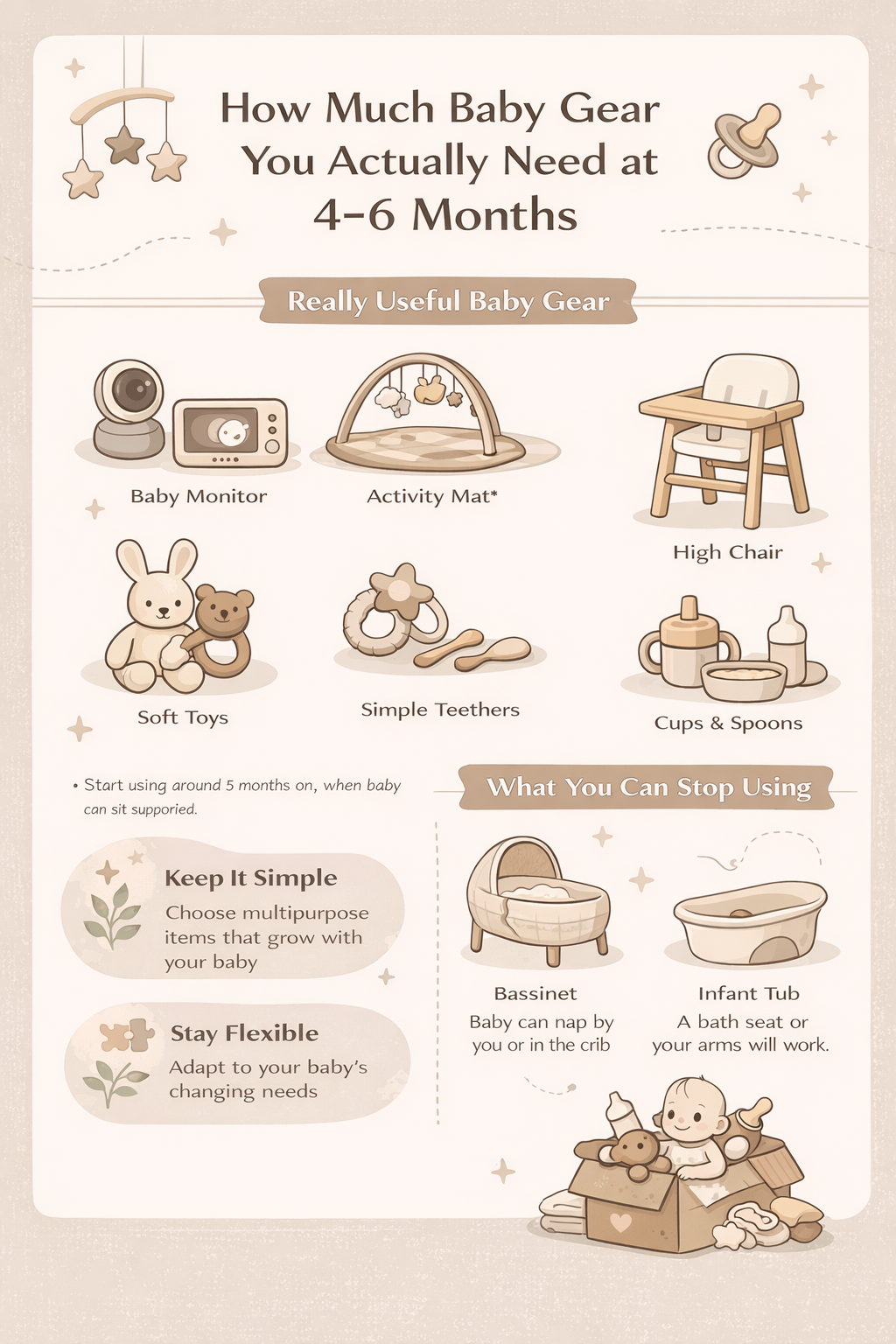
Many newborn-specific products naturally fall out of use at this stage. Bulky gear can start to feel restrictive rather than supportive, while a small number of versatile items end up being used every single day.
This is also the moment when spending habits tend to change. After the intensity of pregnancy and the newborn phase, it becomes easier — and often necessary — to pause and reassess what’s actually worth buying.
If budgeting is part of that reassessment, we’ve shared a deeper look at how to prioritise purchases and where you can realistically save in our guide on budgeting for baby gear, which pairs well with this stage of decision-making
Fewer Items, More Intentional Choices
One of the most surprising things about this phase is how little gear is truly essential once routines begin to settle. The most-used items are often the simplest ones — things that support feeding, sleep, play, and getting out of the house without adding friction to the day.
This stage naturally encourages a mindset shift. Instead of buying things “just in case,” choices become more deliberate. You start asking whether something fits your real daily life, not an idealised version of it.
That clarity is what makes this phase feel lighter.
What’s Coming Next in Settling into Babyhood
As part of the Settling into Babyhood series, we’ll be breaking down the areas that tend to cause the most confusion — and overbuying — during the 4–6 month stage.
In the posts ahead, we’ll cover:
- What changes developmentally around six months and how that affects daily routines
- The tools and gear that genuinely help when introducing solids
- Which toys support development without overwhelming your space
Each post is grounded in real use, not trends — and focused on helping you make thoughtful choices rather than more purchases.
A Final Thought
There’s no universal checklist for this stage. Every baby, home, and routine looks different — and that’s exactly why fewer, better-chosen items often work best.
If something is working for your family, it’s worth keeping.
If something never worked, it doesn’t mean you missed something — it simply wasn’t necessary.
This stage is about clarity, confidence, and creating a setup that supports everyday life.
That’s what settling into babyhood really looks like.