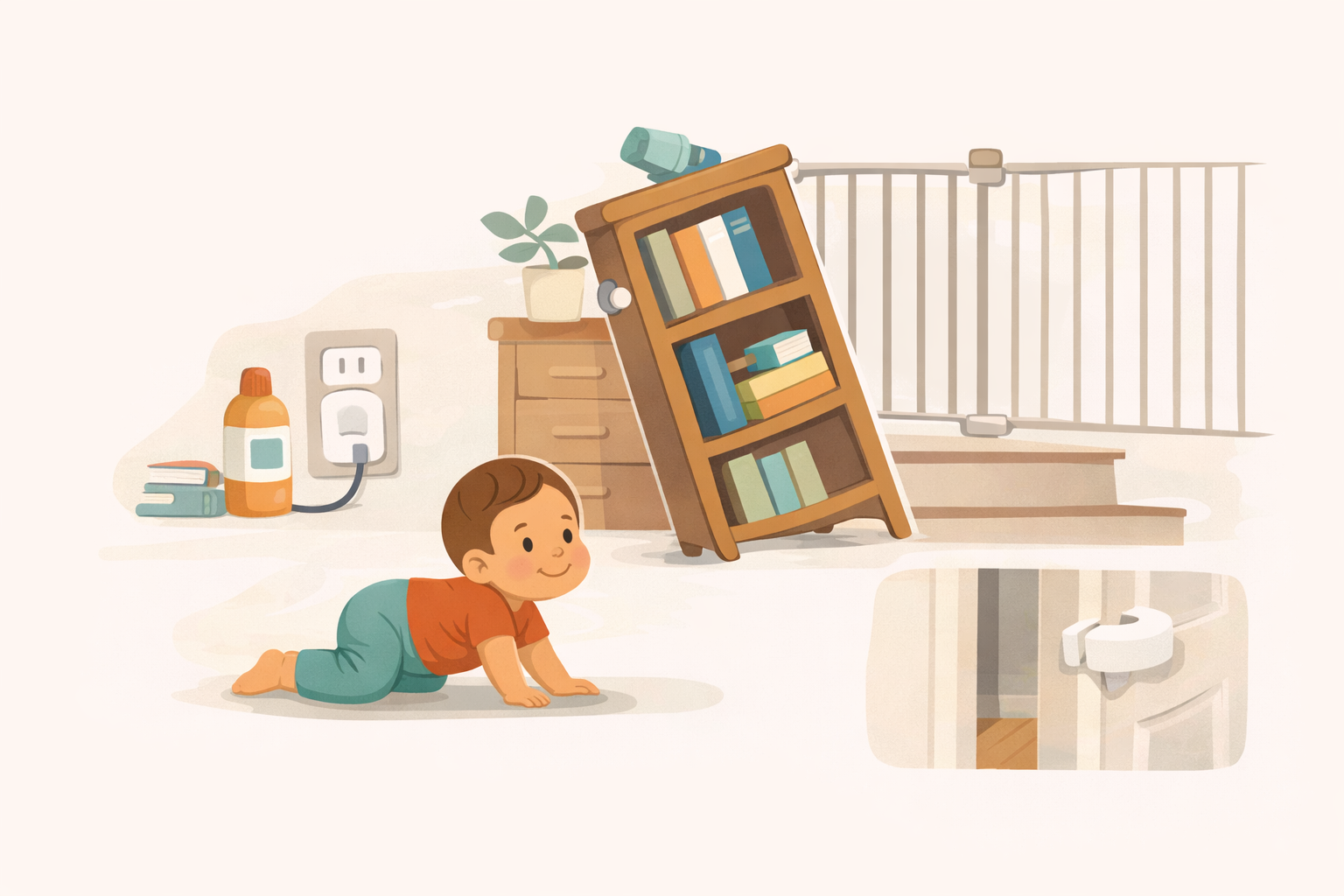
Welcome to the On the Move Series , where we talk honestly about what shifts once babies stop staying where you place them.
There’s a quiet moment when you realize the baby you laid down on a mat is no longer exactly where you left them. At first, it’s just rolling. Then pivoting. Then a determined half-crawl that somehow gets them across the room.
This 7–9 month phase brings a new level of curiosity and independence. And with that independence, your home begins to feel different.
This stage isn’t just about movement.
It’s about perspective.
Seeing Your Home from Their Level
Once mobility begins, you stop thinking about where to place your baby and start noticing what exists at their height.
Table edges feel sharper. Plug points feel lower. Open shelves suddenly look reachable. Even the quiet space under the sofa becomes fascinating.
The shift happens gradually , but your awareness changes instantly. It’s not about panic. It’s about seeing your space the way they now do.
When Furniture Becomes a Learning Tool
As babies begin pulling up to stand , often around eight or nine months , furniture becomes part of the process.
Coffee tables and TV units are no longer just objects. They are balance practice stations. Babies wobble, fall, pull up again, and try repeatedly.
Small tumbles are part of development. But sharp edges don’t need to be.
Soft corner guards and edge protectors in frequently used areas simply reduce impact while they practice this new skill. The goal isn’t preventing every fall. It’s making the inevitable ones less harsh.
The Sudden Obsession with Wires and Sockets
You don’t realize how many wires exist in your house until a crawling baby notices them.
Loose chargers look like toys. Extension boards become interesting. Plug points sit directly at eye level.
This is usually when parents realize supervision alone has limits. You can be in the room , and still not be faster than curiosity.
Covering sockets and tucking away loose wires creates a quieter environment, not because babies are reckless, but because they are persistent. Exploration at this age is relentless.
Kitchens and Bathrooms: Spaces That Change Overnight
Some rooms shift more than others once crawling begins.
Lower kitchen cabinets hold cleaning supplies. Bathroom floors can be slippery. Drawers open easily. Toilet lids are suddenly reachable.
You don’t need to babyproof your entire home at once. Start with the rooms your baby enters daily. Add cabinet latches where needed. Close doors more intentionally. Consider a gate if one area consistently increases your stress.
Babyproofing doesn’t have to look perfect. It just needs to reduce everyday risk.
Creating a “Yes Space” at Home
One of the most helpful changes you can make during this stage is creating at least one space where you don’t constantly say “no.”
A padded mat. A low basket of safe objects. Stable furniture that won’t tip. Nothing fragile within reach.
When babies are redirected every few minutes, they don’t stop exploring, they simply become frustrated. A “yes space” allows free movement without tension. And it lowers parental anxiety more than you might expect.
You won’t eliminate every risk. But you can create pockets of freedom.
The Often-Forgotten Risk: Tipping Furniture
Once babies begin pulling up to stand, they don’t just hold onto furniture, they test it.
They tug drawers. They lean forward with their full weight. They try to climb what looks steady.
Something that felt stable before can shift under uneven force. Anchoring heavier pieces like dressers, bookshelves, and certain TV units becomes less about “extra precaution” and more about quiet prevention.
And furniture isn’t the only thing that changes meaning during this phase.
If your home has stairs, this is the time to prepare; not after the first climbing attempt. Crawling quickly turns into upward curiosity. Installing safety gates at both the top and bottom of staircases adds a layer of protection that supervision alone cannot always provide.
Open shelves shift too. Decorative items, frames, and small objects suddenly sit at grab-level. Babies don’t understand display. They understand access. Moving fragile items higher up (or temporarily storing them away) simply reflects the stage you’re in.
At this age, babies are experimenting not just with movement, but with height, balance, and reach.
The Mistake Most of Us Make
Waiting.
Waiting until crawling feels more confident.
Waiting until pulling up looks stable.
Waiting because “they’re only moving a little right now.”
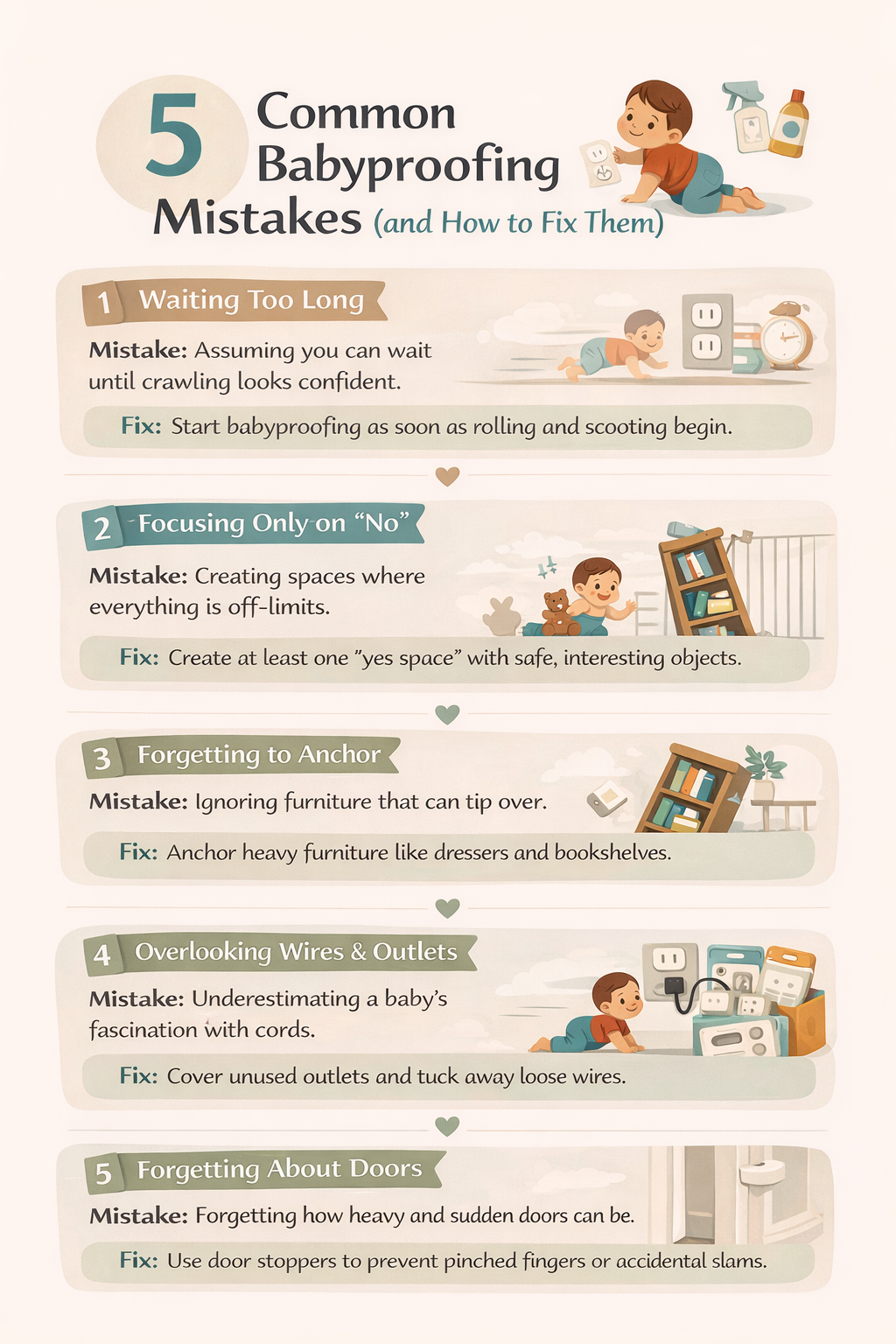
Mobility escalates quietly. Preparing your space slightly ahead of their abilities often feels unnecessary , until you’re grateful you did.
How This Stage Builds on the Last
Mobility doesn’t begin in isolation. It grows from earlier milestones , steady sitting, improved balance, growing curiosity.
If you’d like to understand how this movement phase begins, you can read 6-Month Baby Milestones: Sitting, Solids & Sleep , where we talk about the foundation that leads here.
A Final Thought
This stage isn’t about restricting your baby’s independence. It’s about adapting your environment to support it.
Once they realize they can move on their own, they won’t stop experimenting. And they shouldn’t have to.
Your home doesn’t need to become a padded playground overnight. It simply needs to evolve, gently and thoughtfully, alongside your baby’s growing confidence.