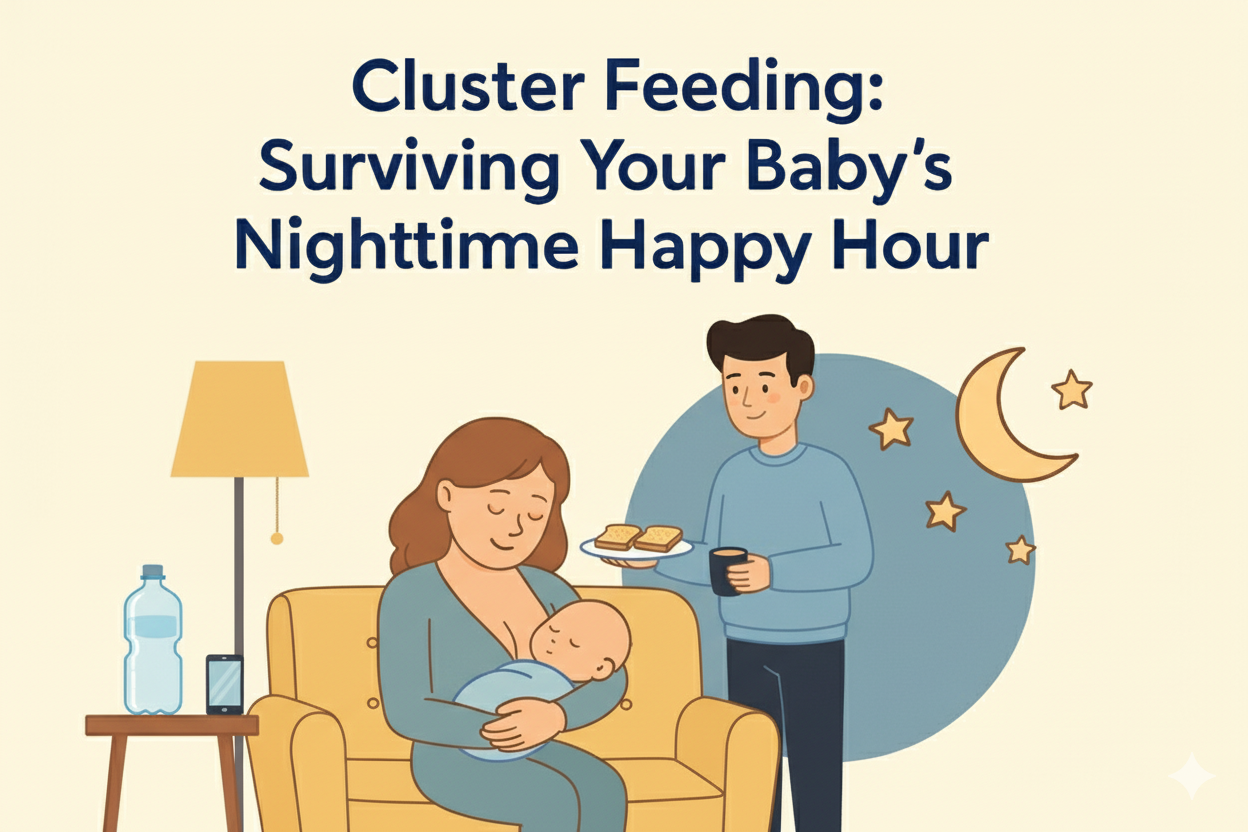
You know the feeling when you’ve had a decent day and you finally feel like you’ve got this feeding thing figured out, maybe even managed a load of laundry. Then the clock hits 6 p.m. and suddenly your sweet baby turns into a tiny, fussy clockwork machine, demanding to be attached to your chest for the rest of the evening.
If you’re sitting there wondering whether your baby is secretly starving or if your milk supply suddenly disappeared — stop right there.
What you are experiencing is almost certainly cluster feeding, one of the most normal (yet exhausting) phases of early parenthood. It doesn’t mean you’re failing; it means your baby is doing exactly what they’re supposed to do.
What on Earth Is “Cluster Feeding”?
Forget the tidy feeding schedules you might have read about. Cluster feeding is when your baby decides to throw all those rules out the window and nurse a lot (sometimes every 30 minutes, sometimes just for five minutes at a time — on and off over a few hours).
This marathon usually lasts for 2 to 4 hours and often comes right before a longer stretch of sleep (well, as long as a newborn’s “long” sleep can be). It’s mentally and physically draining, but there’s always a reason behind it.
The Prime Time for the Feed Fest
So, when does this madness usually hit?
1. The First Few Weeks:
Your baby is put in an order to the “milk factory.” This frequent feeding tells your body, loud and clear, to establish a strong and steady milk supply.
🌙 The Evening Witching Hour
Ah, the witching hour. Somewhere between 5 p.m. and 10 p.m., when you’re ready to wind down, your baby seems to decide the day isn’t over yet. Suddenly, they are fussier, harder to settle and want to nurse or feed on and off.
It’s not because they’re starving. Most of the time, they’re just overstimulated from the day. The lights, the sounds, being passed around — it’s a lot for such a tiny person. Being at your breast (or in your arms) is how they reset. It’s their way of saying, “I’ve had enough of the world, I just need you now.”
2. Growth Spurts: The Secret Behind the Hunger
Just when you think you’ve found a rhythm, your baby will surprise you again. Around 3 weeks, 6 weeks, and 3 months, they hit little growth spurts — both in size and development.
During these times, their appetite shoots up overnight. They’ll want to feed more often, sometimes almost nonstop, and that’s totally normal. It’s their clever built-in system for telling your body, “Hey, I need more milk!”
These phases usually pass in a few days — once your milk supply catches up, things settle down again.
💪 Your Survival Guide: Lean Into the Lounge
When cluster feeding hits, the best thing you can do is stop fighting it. Seriously — just give in.
Trying to finish chores or plan dinner during those marathon evenings will only make you more tired (and probably a bit cranky). This is your cue to hit pause.
Get comfy on the couch, gather your snacks and water, turn on a show and just be there. You’re not spoiling your baby; you’re rather helping them through something that’s hard for them too.
Here’s your four-point plan to make it through those intense hours:
1. Build a Mom (or Dad) Fort
You’re grounded for the evening — in the best way possible. Before the feeding marathon starts, set up your cozy zone:
- Hydrate: Keep a giant water bottle next to you.
- Snack smart: Granola bars, nuts, or anything you can eat one-handed.
- Entertainment: Phone charger, remote, and something light to watch or read.
2. Trust Your Body, Not the Clock
The second you start timing feeds (“It’s only been 20 minutes!”), you’ll stress yourself out. Ignore the clock.
Instead, watch your baby’s cues and their output — if there are plenty of wet and dirty diapers, your milk supply is doing just fine.
Cluster feeding can make many new moms question whether their milk is enough, especially when others offer “advice” about babies not feeling full on just breast milk. But these marathon feeding sessions don’t mean you’re not producing enough — they’re your baby’s natural way of boosting your supply. Trust your body and the process; you’re already giving your baby exactly what they need.
3. Get the Baby Naked
Sometimes, the best fix for fussiness is simple — skin to skin.
Undress your baby down to the diaper, cuddle them close on your chest and cover up with a soft blanket. It’s amazing how fast they relax when they feel your heartbeat and smell your skin.
And bonus: that cozy connection also helps your body keep up with their feeding needs.
4. Tag-Team It If You Can
If you have a partner, this is their cue to step up. They can (rather should):
- Handle dinner (yes, even if it’s just takeout)
- Bring you water and snacks
- Take over burping, diaper changes and gentle rocking between feeds
One Last Thing to Remember
Cluster feeding a newborn can be tiring, but it’s also one of the most reassuring signs that your baby is growing, boosting your milk supply and learning to settle into their sleep. You’re providing nourishment, comfort and security — three of the most powerful gifts a parent can give.So, take a deep breath, snuggle in and embrace the temporary chaos.
Every day is a brand new day — and one day soon, you’ll look back and realize you made it through with more strength (and patience) than you ever thought you had. 💛