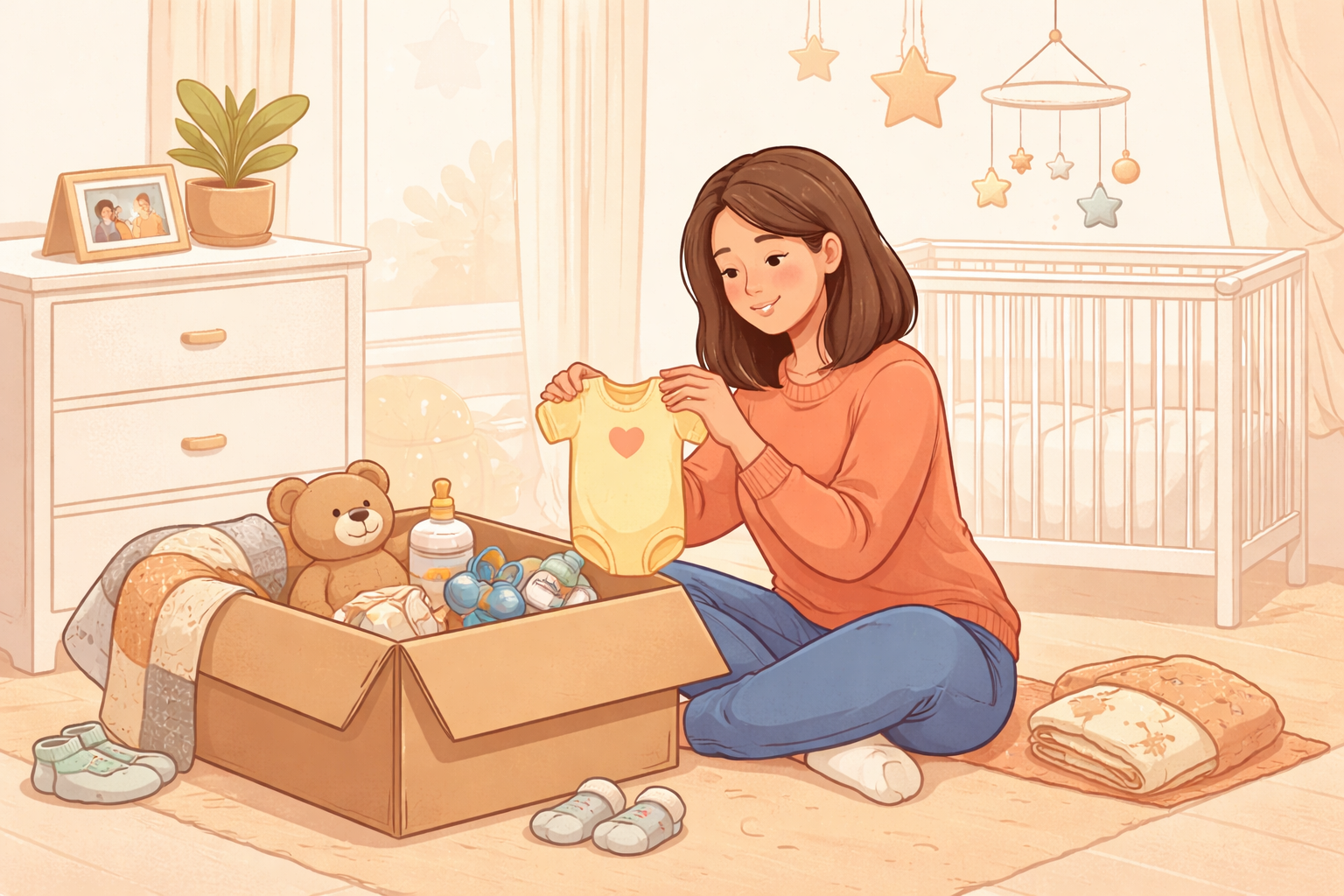
When we asked parents what they had stored “just in case,” the answers seemed practical at first — pump parts, baby clothes, pregnancy tests, baby carriers, tiny outfits saved from every stage. But as the reflections came in, it became clear that these weren’t just objects tucked away in cupboards. They carried meaning.
What looks like clutter on the outside often represents something much deeper on the inside.
The “What If We Need It Again?” Phase
For many parents, storage begins with uncertainty.
One parent wrote:
“Pump parts.”
“What if we need it again.”
“Not yet realised.”
“Still holding it!!!”
That hesitation “not yet realised” captures something many of us feel. Parenthood doesn’t come with clear endings. You’re always wondering whether this stage is truly over. So instead of deciding, we delay. We store. We keep things “just in case.”
The box remains not because it’s useful, but because we’re not ready to say, “This chapter is done.”
The Sentimental Box
For others, the attachment wasn’t practical at all — it was emotional.
One parent shared:
“Pregnancy test, baby carriers, few cute outfits from every stage.”
“It’s a sentimental attachment…”
Another simply wrote:
“Baby clothes.”
“Sentimental.”
These aren’t random items. They are markers of transformation. The pregnancy test that changed everything. The carrier that held countless sleepy afternoons. The tiny clothes that once felt impossibly small.
Letting go of these things can feel like letting go of the version of yourself that lived in that season.
But the truth is, the memory doesn’t disappear when the object does.
When Reality Sets In
There’s a pattern many parents don’t talk about openly — we often realise it’s time to let go only when something shifts internally, not externally.
It’s rarely about cupboard space.
It’s usually about clarity.
For some, that clarity comes when the uncertainty ends — when they know their family is complete, or when another child changes their perspective.
One parent reflected:
“After second baby.”
“Sad.”
The second baby often brings a quiet finality. You suddenly recognise which “lasts” are truly last — the last newborn phase, the last tiny onesies, the last time you’ll pack away clothes for “later.”
Until that moment, storage feels temporary.
After it, it feels definitive.
Clearing those items isn’t just about organising shelves. It’s about accepting that a season has closed. And even when that season was beautiful and exhausting and overwhelming — closing it can still bring a sense of grief.
Letting go becomes emotional not because of the object, but because of what it represents.
The Surprise of Letting Go
Not every story ended in heaviness.
One parent shared that she decided to give some baby clothes to friends and donate others. In doing so, she realised:
“It was not so hard to actually let it go once you actually let it go.”
Another mentioned that clearing items helped her “get back space for new stuff.”
Often, the fear of letting go feels bigger than the action itself. Once done, what replaces it isn’t regret — it’s space. Physical space. Emotional space. Room for what comes next.
One thoughtful reflection offered a middle ground:
“Keep few things and maybe repurpose them into a nice quilt and then don’t hoard anything else.”
Maybe it isn’t about keeping everything or clearing everything. Maybe it’s about choosing intentionally.
What We’re Really Holding Onto
When we asked what parents would tell their earlier selves, the answers were simple:
“You were great.”
“Enjoy the moments.”
Perhaps that’s what this is really about.
We store things because we’re afraid the moment will fade. But the moment has already shaped us. It lives in memory, in growth, in who we’ve become as parents.
Letting go isn’t about erasing the past. It’s about trusting that we don’t need a carton to prove it happened.
If you’re holding onto baby items you no longer need, don’t let them sit in storage.
The IPF App lets you buy, sell, and pass on baby products within a trusted parent network.
Turn clutter into value — and help another parent along the way.
And if you’re still holding onto that one box – you’re not alone 🤍