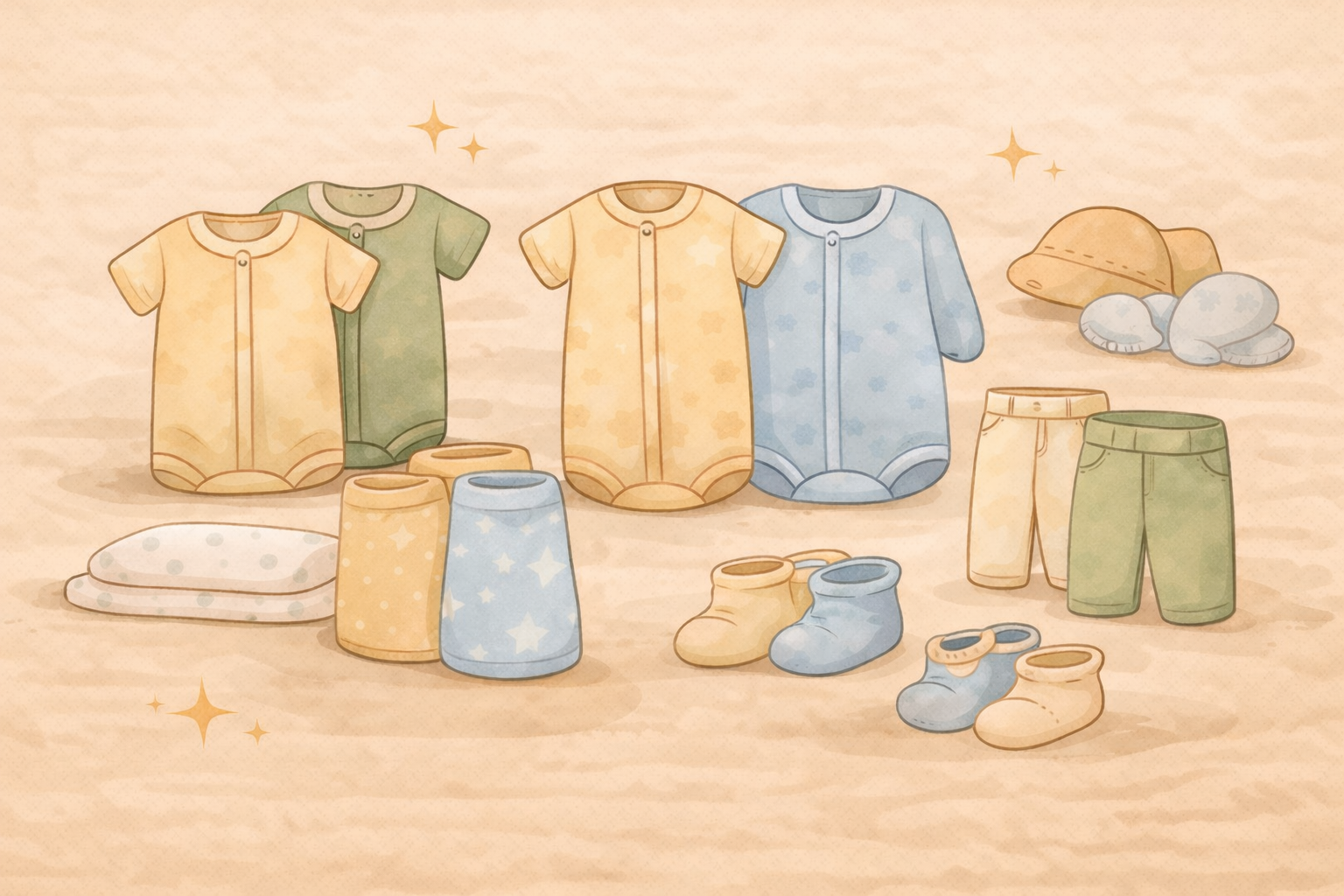
If you’re in the nesting phase right now, you’re probably feeling a mix of excitement and quiet confusion. Baby clothes are tiny, adorable, and everywhere—and it’s easy to wonder if you’re missing something important.
Here’s a reassuring truth many parents learn only after their baby arrives: Newborns don’t need many clothes. They need a few soft, comfortable pieces that work with frequent changes and real-life routines.
This piece is meant to gently simplify things—so you can shop with confidence, not pressure.
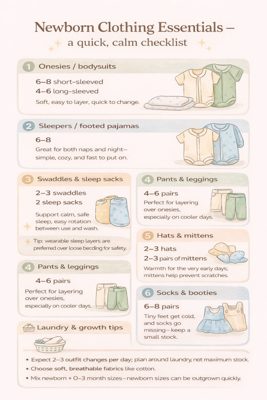
Here’s a quick visual overview before we go deeper.
Start with sizing, not shopping
Before looking at numbers, it helps to know this: newborn sizes don’t last long.
Some babies outgrow them within weeks, and others skip them altogether. Most parents find that having just enough newborn clothes, and a slightly better stock of 0–3 month sizes, works best. It gives you flexibility without overbuying.
What babies actually wear every day
In the early weeks, babies spend most of their time feeding, sleeping, and being held. That’s why simple onesies quietly become the most-used item.
A small rotation is usually enough—something you can change easily, wash often, and reach for without thinking. Soft cotton fabrics and easy neck openings make everyday care smoother, especially during frequent diaper changes.
Nights are simpler than we imagine
Sleepwear doesn’t need to be fancy. Footed sleepers often become a baby’s main outfit, day and night. They keep babies warm, comfortable, and easy to change—especially during midnight wake-ups.
Having a few clean options ready can make nights feel calmer, even when sleep is broken.
While clothes are what we think about most, a few everyday essentials often get just as much use in the early weeks. Keeping a small number of swaddles, towels, and burp cloths on hand can make frequent feeds, spit-ups, and quick clean-ups feel more manageable. You don’t need many—just enough to rotate between washes.
A little layering goes a long way
For outings or cooler days, a few soft pants or leggings are helpful. You don’t need many—just enough to layer over a onesie when needed.
When it comes to warmth, light layers usually work better than bulky clothes. Babies typically need just one extra layer compared to adults.
The small extras (that don’t need to multiply)
Hats, socks, and mittens are useful — but only in small numbers. A couple of each is usually enough to get through daily use and laundry cycles.
Many parents find fold-over cuffs on onesies more practical than mittens, and socks tend to disappear no matter how many you buy—so keeping it simple helps.
Special outfits are optional
It’s okay to keep one or two outfits for photos or family visits. Beyond that, most newborns live in comfort-first clothing. Babies grow quickly, and many “special” outfits are worn once — or not at all.
A gentle reminder
Newborn clothing isn’t about building a wardrobe. It’s about reducing decisions, easing laundry, and giving yourself one less thing to manage in a new phase of life.
Start small. Add only when needed.
And a small reality check—if there’s one thing truly worth budgeting for, it’s diapers. They’ll get far more use than most newborn outfits. 😄
You’re not underprepared—you’re being thoughtful.
🤍 Looking for more calm, practical parenting guidance?
Explore the IPF Community for real-life tips, trusted parent experiences, and clutter-free recommendations—made to support you, not overwhelm you.