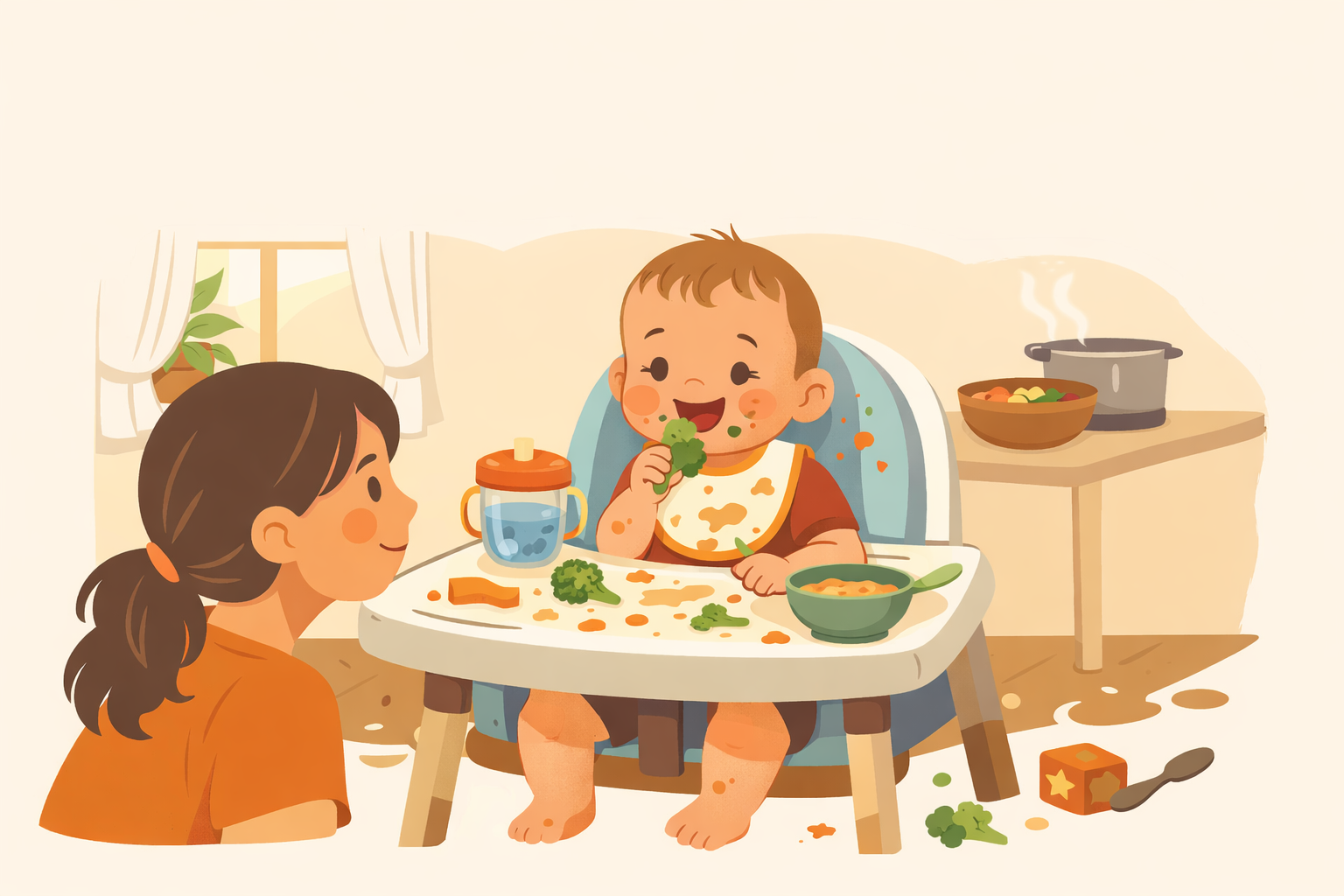
Starting solids feels like a clear milestone on paper.
Six months. A spoon. A bowl. A new chapter.
But in reality, it’s rarely that simple.
It’s the shift from exclusive milk feeds to textures and timing. From instinct to second-guessing. From “just feed the baby” to “Is this enough? Is this right? Should I be doing more?”
We asked 18 parents to share their real experience of starting solids — what genuinely helped, what felt harder than expected, and what surprised them most.
What emerged wasn’t a perfect method.
It was something far more useful: perspective.
What Actually Made a Difference
If there was one consistent theme across responses, it wasn’t baby-led weaning versus purees. It wasn’t a specific product. It wasn’t a feeding hack.
It was routine.
Parents repeatedly mentioned that having fixed mealtimes, sitting in one place, and offering food consistently — even when it was rejected — made the biggest difference.
One parent shared:
“Routine and consistency in offering solids despite baby rejecting it.”
Another described how setting predictable meal times helped form “a pattern and habit of asking for food vs milk.”
Some families used high chairs. Others sat on the floor. Some followed a mix of traditional spoon feeding and baby-led weaning. The approaches varied — but the rhythm mattered.
And interestingly, many parents realised they needed far less gear than they initially thought.
Fancy suction plates. Designer feeding sets. Separate steaming gadgets.
Several said their babies were perfectly content with basic steel bowls and spoons.
“Baby did fine with normal steel plates and spoons too.”
What helped most wasn’t upgrading equipment. It was simplifying the process.
The Emotional Weight of Mealtimes
While routine created stability, starting solids also came with unexpected emotional strain.
The mess was a common frustration. Parents spoke about constant clean-ups and the exhaustion of daily meal prep. Deciding what to cook every single day felt heavier than anticipated.
But beyond the physical effort, there was anxiety.
Fear of choking came up repeatedly. Watching a baby gag for the first time can be unsettling, even when you know it’s part of learning.
Food rejection was another challenge. Babies who ate enthusiastically one day and refused everything the next left parents questioning themselves.
“Some days they eat more and some days nothing at all.”
There was also pressure from outside.
Several parents described being advised to add salt, stick strictly to purees, distract with screens, or increase quantities. Navigating these opinions while trying to follow their own instincts wasn’t easy.
One parent reflected:
“Explaining and making everyone understand that salt will not be added to baby food initially was very difficult.”
Starting solids wasn’t just about feeding. It was about building confidence — often while filtering noise.
Babies Are More Capable Than We Think
Amidst the mess and doubt, one reassuring pattern stood out: babies adapt.
Parents were surprised by how quickly their children learnt to sip from a cup, explore textures, or scoop food independently. Some babies transitioned smoothly to self-feeding. Others needed more time — but eventually found their rhythm.
A common theme in the answers was concerning hunger signals.
“Babies can decide how much they want to eat. They have idea about their hunger.”
Another parent wrote:
“Trust that tiny human with its hunger cues. They are much brilliant than we think them to be.”
Some babies ate far more than expected. Others preferred finger foods over purees earlier than anticipated. A few transitioned to eating modified family meals, reducing the need for separate cooking.
The learning wasn’t just happening for the baby. It was happening for the parents too.
It’s Not a Straight Line
One of the most grounding insights from these 18 experiences is that starting solids doesn’t follow a neat progression.
For some families, it felt easier after just a week, once routine settled in. For others, it became manageable when they stopped cooking separately and shifted to the “family pot.”
But a few parents shared that things actually became harder around one year, when preferences strengthened and rejection increased.
Some wrote simply:
“Not yet.”
That honesty matters.
There isn’t a universal turning point. This phase evolves as your baby evolves. What feels smooth at six months might feel challenging at ten. What works today may need adjusting next month.
And that’s normal.
The Small Surprises
Beyond the big lessons, parents also shared details that don’t often make it into checklists.
The unexpected variety of potty colours.
The way water intake influences digestion.
How deeply babies observe what everyone else is eating.
How quickly they can learn to drink from a straw or cup.
One parent described her baby as “ready to investigate the food.”
Another realised that once she reduced her own stress around quantity, mealtimes became calmer overall.
These weren’t just feeding milestones. They were shifts in perspective.
Looking Back
When asked what they would do differently, many parents said they wouldn’t change much.
Some mentioned introducing open cups earlier. Others would have built the habit of sitting in one place sooner. A few wished they had worried less about fancy recipes.
But the dominant tone wasn’t regret.
It was acceptance.
“I think I did the best I could.”
And that may be the most important takeaway of all.
If You’re Just Starting
If you’re at the beginning of this phase and feeling unsure, know that confusion is common.
Starting solids is not just about nutrition. It’s about having faith in your baby’s signals and in your own judgment.
There is no single correct method. No universal timeline. No perfectly tidy kitchen.
If you’d like a practical starting point on what tools are genuinely useful — and what you can comfortably skip — you may find our guide on Introduction to Solids: The Tools & Gear You’ll Actually Use helpful. It breaks down the basics without adding overwhelm.
More than anything, these 18 parents remind us that starting solids is a shared learning process.
Your baby is discovering food.
You are discovering flexibility.
And both of you are doing better than you think.