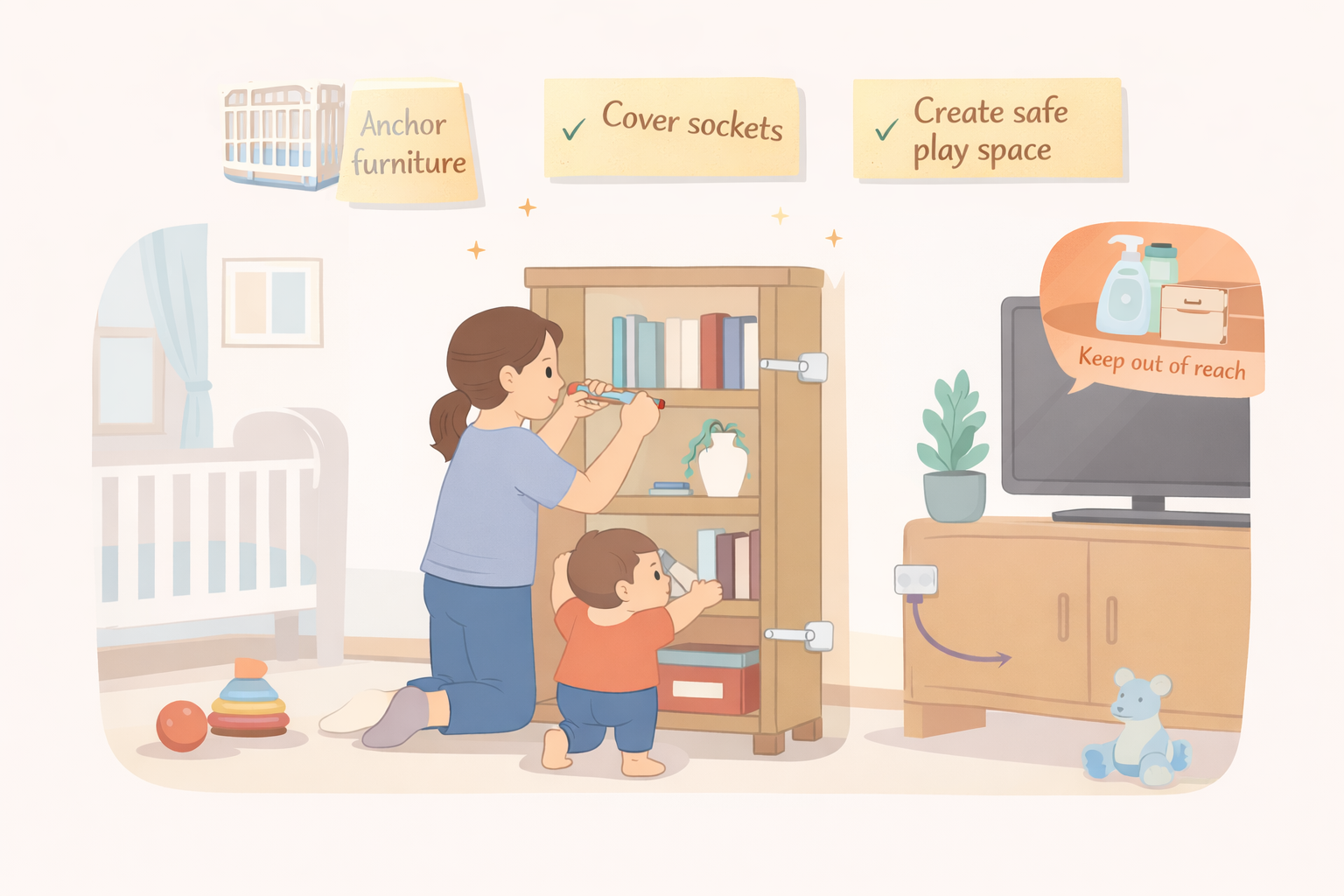
When babies start moving, the house suddenly looks a little different. Corners feel sharper, drawers seem more tempting, and everyday things; like wires, shelves, or table edges, suddenly catch your attention in a new way.
Many parents feel the urge to babyproof everything the moment their baby begins rolling or crawling. But in reality, babyproofing doesn’t need to mean turning your entire home upside down.
Most homes only need a few thoughtful adjustments to make everyday spaces safer while still allowing babies to explore freely.
What Babyproofing Really Means
Babyproofing is often imagined as installing locks and guards everywhere in the house. In practice, it’s usually much simpler than that.
At this stage, babies explore the world through curiosity. They pull, push, open, and reach for anything that grabs their attention. Babyproofing simply means noticing what your baby might interact with and making small changes so those moments of curiosity remain safe.
It’s less about covering every surface and more about reducing the obvious risks.
Seeing the Home From Your Baby’s Level
One helpful trick many parents discover is to briefly look at the room from their baby’s perspective.
When you sit on the floor or crawl around for a moment, it becomes much easier to notice what your baby might reach. Electrical sockets, dangling cables, low shelves, and small objects suddenly stand out.
Often, the solution isn’t complicated. Moving fragile items a little higher, clearing the floor of small objects, or keeping certain areas tidier can already make a big difference.
Why Stable Furniture Matters
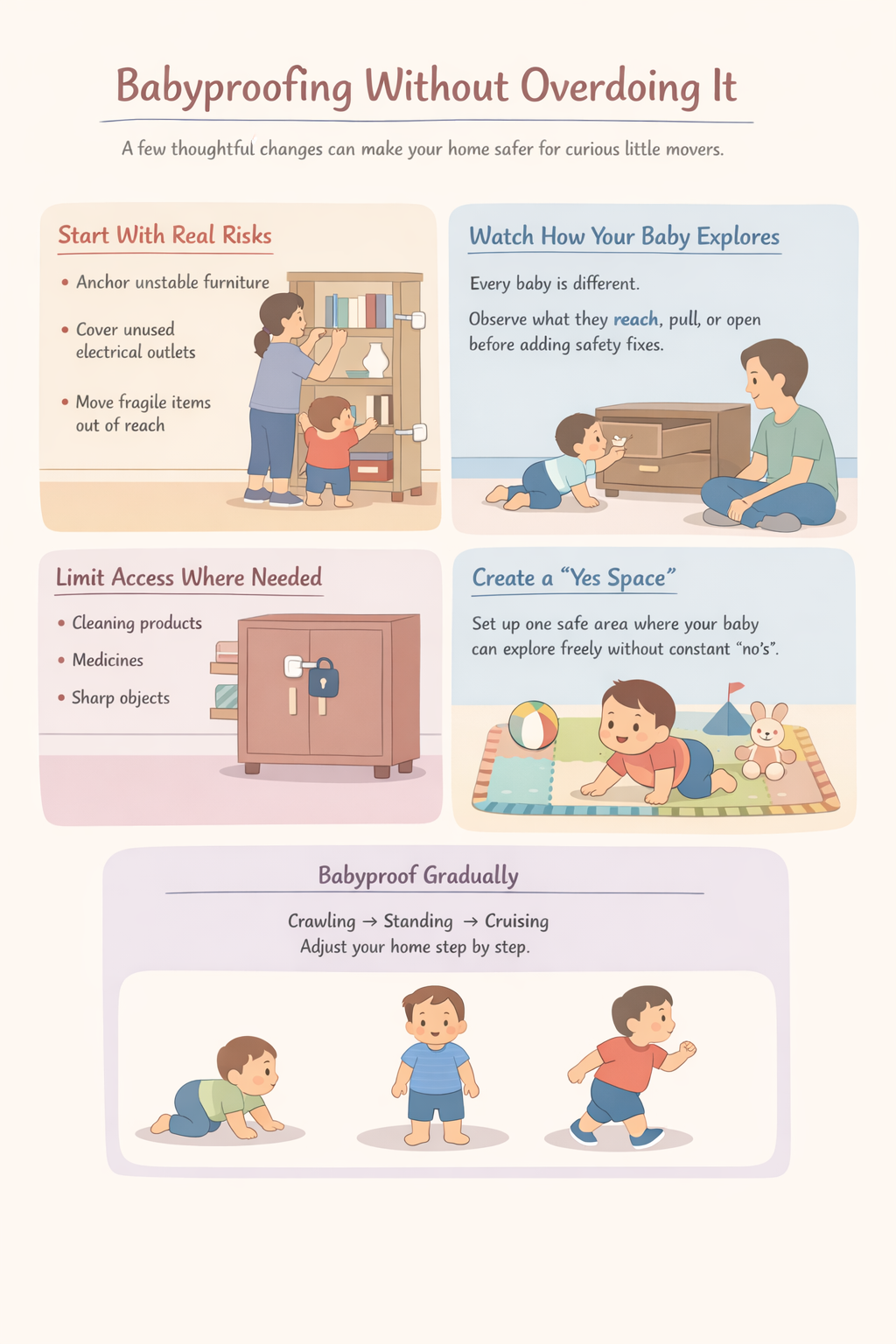
As babies begin pulling themselves up, furniture naturally becomes their support system. A coffee table, bookshelf, or TV unit quickly turns into something to grab while trying to stand.
Because of this, one of the most important babyproofing steps is making sure furniture is stable. Pieces that could tip over if pulled should be secured or positioned safely.
It’s something parents may not think about at first, but it plays a big role once babies start experimenting with standing.
Managing Drawers and Cabinets
Drawers and cabinets are fascinating for babies. Opening and closing them can feel like a game they want to repeat again and again.
However, that doesn’t mean every drawer in the house needs to be locked. It usually helps to focus on the ones that contain things babies shouldn’t access; cleaning products, medicines, sharp objects, or fragile items.
Limiting who can get to these places keeps babyproofing useful without making daily life harder.
When Safety Gates Can Help
Once babies start crawling, they somehow find their way to the exact places you hoped they wouldn’t; staircases, the kitchen entrance, or rooms with lots of things within reach.
This is where safety gates can make everyday life a little easier. Instead of constantly rushing after your baby or redirecting them every few minutes, a gate can simply block off certain areas for now.
Many parents place one near the staircase or at the entrance of the kitchen. It helps keep curious crawlers from wandering into spaces that might need closer supervision.
The idea isn’t to stop your baby from exploring. It’s really just about guiding that exploration toward parts of the home that are already safer for them to move around in.
It’s easy to miss little things
The tiny things are sometimes the ones we miss. Babies that can crawl often can reach charging cables, curtain cords, and device wires.
Sharp furniture edges are another thing parents start noticing once babies begin moving around more confidently. Sealing the corners of dining tables, centre tables, or other low furniture can help reduce bumps as babies learn to crawl, pull up, and balance.
Similarly, small objects like coins, buttons, or toy pieces can easily end up on the floor. Getting into the habit of doing a quick floor check now and then can prevent many small accidents.
Setting up a place where it’s easier to say “yes”
Many parents find it helpful to set up at least one area in the home where babies can move freely without constant interruptions.
This might be a play mat corner, a section of the living room, or a playpen where the surroundings are already baby-safe. Having a contained space like this allows babies to explore comfortably while parents feel a little more relaxed.
It also means you don’t have to say “no” every few minutes.
Babyproofing Happens Gradually
One thing parents quickly realise is that babyproofing isn’t a one-time task. As babies grow, their abilities change almost overnight.
A baby who was only crawling last week may soon start pulling up or cruising along furniture. With each new skill, they begin reaching new places.
Instead of trying to prepare for everything at once, it often works better to adjust the home gradually as your baby grows.
A Gentle Reminder
It’s easy to feel like you need to babyproof every corner of the house. But most of the time, babies simply need a safe environment and attentive supervision.
A few thoughtful changes usually go a long way. The goal isn’t to remove curiosity from your baby’s world — it’s to make sure that curiosity can unfold safely.
A Note on Babyproofing Essentials
As you begin making small adjustments around the house, some families choose to add simple safety solutions such as child-proof tapes and edge protectors for sharp furniture corners or baby safety gates to limit access to certain areas.
Many parents find that starting with one or two small changes in the areas their baby explores most is often enough in the beginning.