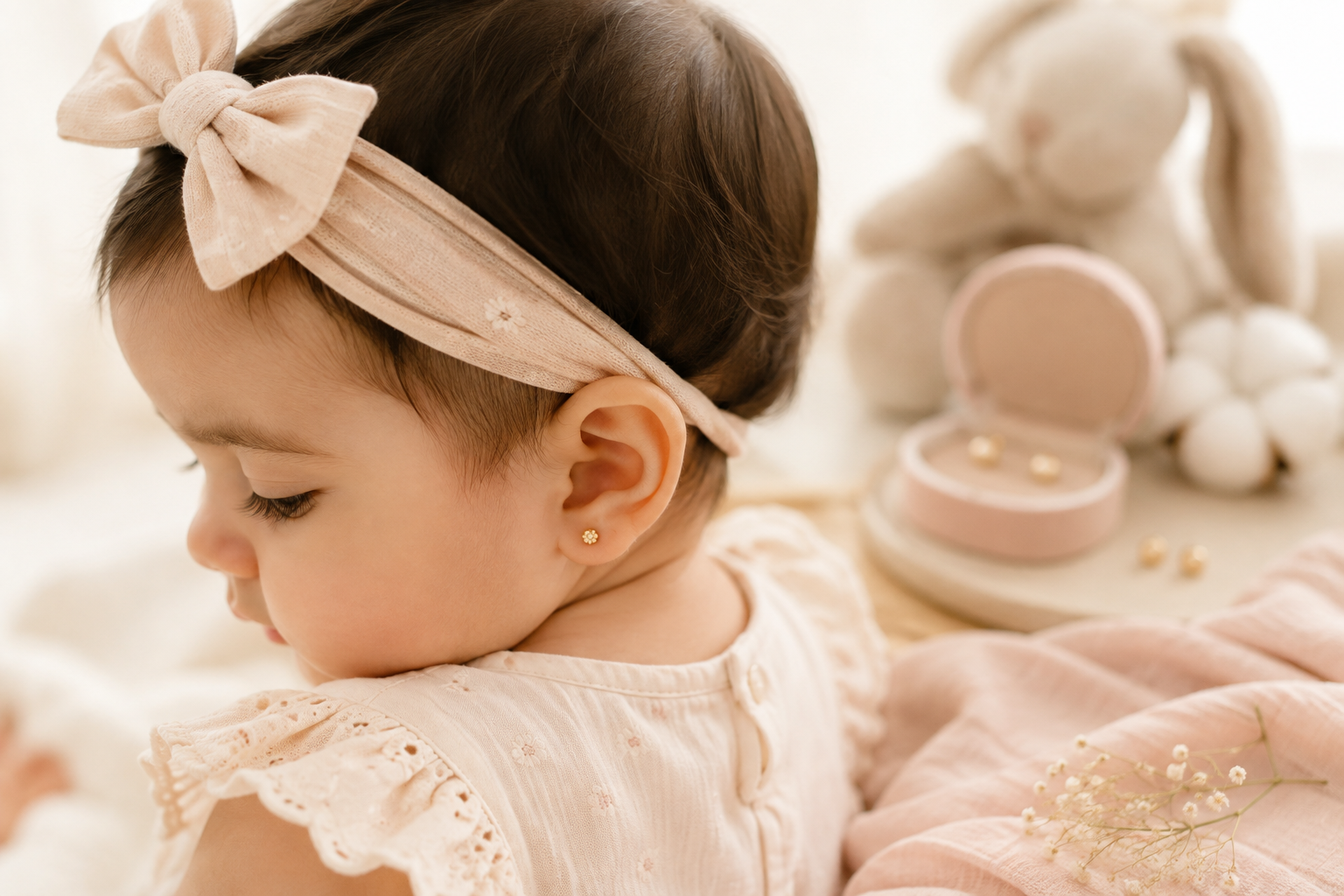
Few parenting decisions spark as much back-and-forth as ear piercing for babies. Traditional goldsmith piercing? A piercing gun? Or a hospital/ENT clinic?
A recent discussion in one of our IPF parenting community groups sparked exactly this conversation. Parents shared their personal experiences with all three methods — the pain, the hygiene concerns, the aftercare, the surprises. While opinions varied, a few common themes emerged clearly.
Note: The experiences below are personal opinions shared by parents in our community, not a clinical study or formal survey. They shouldn’t replace medical advice — if you have concerns about your baby’s health or readiness for piercing, please consult your paediatrician.
Quick Comparison: Traditional vs Piercing Gun vs Hospital
| Method | Speed | Hygiene Control | Pain (Parent-Reported) | Best For |
|---|---|---|---|---|
| Traditional (goldsmith/karigar) | Very fast — a few seconds | Depends entirely on the individual’s practices | Brief crying, similar to other methods | Parents who trust an experienced, established piercer |
| Piercing gun | Slower prep, quick piercing | Depends on equipment sterilisation | No clear difference reported | Parents who prefer this method with a trained, sterile-equipment professional |
| Hospital / ENT clinic | Moderate | Generally highest — sterile, medical setting | No clear difference reported | Parents prioritising medical supervision and peace of mind |
Is There a “Best” Method?
The community discussion centred on the same three options most Indian parents weigh:
- Traditional ear piercing by an experienced jeweller or karigar
- Piercing gun
- Hospital or ENT clinic piercing
There wasn’t a clear winner. Several parents shared that they leaned toward one method over another based on speed, hygiene confidence, convenience, and — most importantly — how experienced the person performing the piercing was, rather than any proven scientific advantage of one method over the rest.
Traditional Ear Piercing: Why Many Parents Preferred It
Many parents in the discussion said they ultimately went with the traditional method. Their reasoning:
- The actual piercing itself is over in a few seconds
- Experienced karigars perform hundreds of piercings and work fast
- With babies moving around constantly, a shorter procedure felt easier to manage
One parent described initially planning to use a piercing gun for perceived safety, but switching after realising the traditional method’s actual piercing time was shorter than the gun’s setup process. Another mentioned their toddler cried for only a few minutes and was easily distracted right after.
What About Piercing Guns?
Some parents in the group leaned toward piercing guns, believing they might hurt less, be more hygienic, or reduce complications.
However, several parents who’d researched both methods noted they couldn’t find convincing evidence that one method is significantly safer than the other when performed correctly. The recurring theme: it’s the skill of the person performing the piercing and proper sterilisation that matter far more than which tool is used.
Does Traditional Piercing Hurt More?
This was one of the most common worries raised.
Parents of active toddlers were concerned traditional piercing would be more painful. But several experienced parents pushed back on that assumption, sharing that:
- Babies tend to cry regardless of method
- The crying usually lasts only a few minutes
- Most babies settle quickly once distracted
Pain tolerance clearly varies child to child, and the discussion didn’t land on a consensus that any one method is meaningfully less painful.
Hospital Ear Piercing: A Popular Alternative
A good number of parents preferred hospitals specifically for the hygiene confidence it offers. Points raised included:
- Sterile equipment as standard
- Medical supervision on hand
- Pre-sterilised earrings available at some hospitals
- Immediate medical help if anything goes wrong
A few parents also mentioned that ENT specialists perform ear piercing, and that some hospitals in certain cities even offer home visits through trained nurses.
If hygiene is your top priority, a hospital setting may offer the most reassurance.
Is Infection More Common at Jewellery Stores?
Opinions here were genuinely mixed. Some parents felt jewellery stores carry higher infection risk; others reported completely infection-free experiences at goldsmiths.
The common thread in the discussion: infections tend to come down to hygiene, sterilisation, aftercare, and the piercer’s experience — not simply the type of venue.
What About Nerve Points and Acupuncture Beliefs?
A few parents in the group referenced traditional beliefs that experienced piercers avoid certain nerve points, and mentioned acupuncture-related benefits associated with ear piercing.
Worth knowing: there’s currently no strong scientific evidence supporting acupuncture-related health benefits from ear piercing, or that any method is inherently safer due to nerve placement. These remain cultural beliefs rather than established medical fact.
Aftercare Tips Parents Shared
Regardless of method, the community’s advice was consistent:
- Choose someone experienced, whatever the method
- Confirm sterile equipment is used
- Use good-quality earrings (gold or medical-grade studs were widely recommended)
- Follow aftercare instructions closely
- Keep the area clean
- Avoid unnecessary touching or twisting unless advised otherwise
- Watch for redness, swelling, pus, or fever, and consult a doctor if these appear
Decision Matrix: Which Method Fits Your Priorities?
| If you prioritise… | Consider… |
|---|---|
| Speed and a trusted family jeweller | Traditional piercing |
| A specific technique with sterile equipment, done by a trained professional | Piercing gun |
| Maximum medical oversight and sterile conditions | Hospital / ENT clinic |
There’s no single “correct” choice here. What consistently mattered across the discussion was the piercer’s experience, proper sterilisation, good aftercare, and your own comfort with the provider — not the method itself.
Final Thoughts
From this community discussion, one takeaway stood out clearly: there isn’t a single “best” method for every baby. Parents shared positive experiences across traditional piercing, hospitals, and piercing guns alike. What mattered most, again and again, was choosing an experienced professional, insisting on proper hygiene, and following good aftercare.
The reassuring part? Most babies cry for only a few minutes and are back to smiling before you know it.
FAQs
What is the safest way to pierce a baby’s ears? The safest option is having the piercing done by an experienced professional using sterile equipment — whether that’s at a hospital or with a trusted traditional piercer.
Does traditional ear piercing hurt more than a piercing gun? Parent experiences were mixed. Most reported babies crying briefly regardless of method, with no clear difference in pain between the two.
When is the best age to pierce a baby’s ears? There’s no universal recommendation. Some families choose infancy; others wait until the child is older. Speak with your paediatrician if you’re unsure what’s right for your baby.
How long does ear piercing take? The actual piercing itself usually takes only a few seconds. Preparation time varies depending on the method chosen.
Is a piercing gun more hygienic than traditional piercing? Not necessarily. Hygiene depends more on sterilisation practices and the piercer’s experience than on the tool itself.
Found the right earrings yet?
Once your baby’s ears have healed, browse gently-used baby earrings, starter studs, and jewelry boxes from other parents on IPF — free to list, protected by in-app escrow, with doorstep pickup and drop so you don’t have to step out. [Explore the IPF marketplace ]