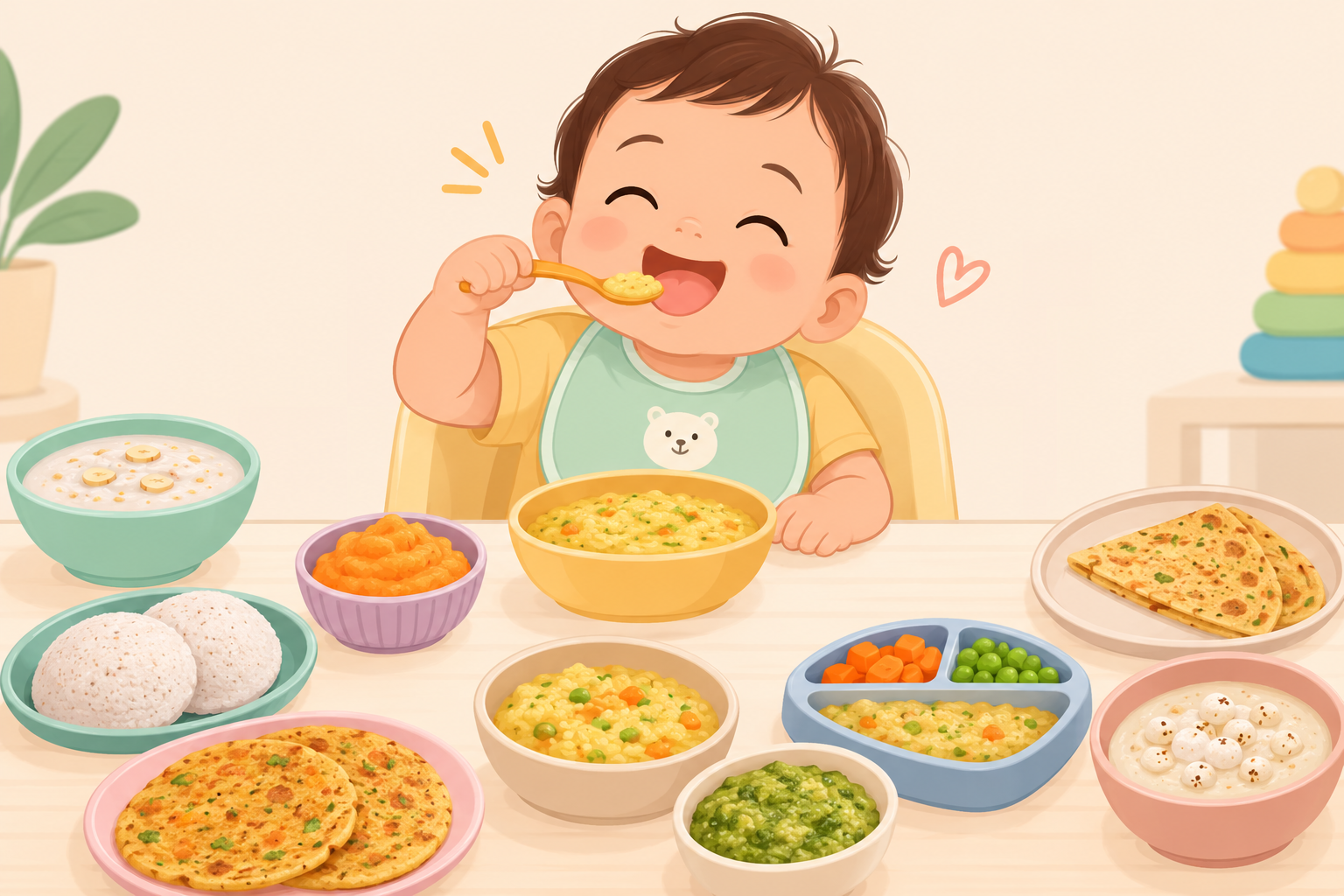
Starting solids is one of those milestones every Indian parent has an opinion about — your mother-in-law swears by ragi, your pediatrician talks about iron-rich purees, and your Instagram feed is full of Western baby-led-weaning videos that don’t quite match what’s in your kitchen.
The truth? You don’t need a separate “baby food” aisle. Dal, rice, millets, ragi, oats, seasonal vegetables, paneer and wheat — the same ingredients already in your kitchen — can be turned into nutritious, age-appropriate meals for your baby.
Here’s a practical, no-fuss list of Indian meal ideas to take your baby from first foods to family meals, organized by what you’re actually cooking with.
Before you start: Every baby develops at their own pace — always follow age-appropriate textures and stay with your baby while they eat. Avoid added salt, sugar and honey for babies under 12 months, and check with your pediatrician before introducing common allergens.
Quick Reference: What to Cook, By Ingredient
| Base Ingredient | Best For | Easy Combos |
|---|---|---|
| Wheat / Bajra / Jowar | First porridge stage | + banana, + pear, + cooked carrot |
| Ragi | Iron-rich staple, all ages | Idli, dosa, appam, cheela |
| Suji (semolina) | Soft, quick meals | + grated vegetables, or kheer |
| Rice + Dal | Daily staple, all ages | + carrot, spinach, peas, sweet potato |
| Daliya / Quinoa | Fibre + protein khichdi | + moong dal + seasonal veg |
| Oats | Sweet or savory | Sweet: + banana/fruit · Savory: + carrot, peas, spinach |
| Makhana | Calcium-rich kheer | Roasted, powdered, cooked in milk |
| Sweet Potato | Naturally sweet, easy mash | + dal, + rice, + paneer |
1–8: Porridges, Idlis and Soft Grain Meals
1. Wheat, Bajra or Jowar Flour Porridge — Cook the flour thoroughly with water until smooth, thickening the texture as your baby gets used to solids. Add mashed fruit or cooked vegetables for older babies.
2. Ragi Idli, Dosa or Appam — Soft ragi idlis, dosas or appams adapt easily to your baby’s age and eating skills. Keep them soft and mashable for younger babies; let older babies practise self-feeding with small pieces.
3. Suji Appam with Vegetables — Combine semolina with finely grated carrot, beetroot, spinach or peas. Make them soft rather than crisp so they’re easy to manage.
4. Vegetable Cheela — Besan, ragi, wheat, or bajra flour batter mixed with finely chopped vegetables like carrot, spinach, beetroot, tomato or peas. Cut into age-appropriate pieces.
5. Suji Kheer — Cook suji until soft and creamy; sweeten naturally with mashed banana or cooked fruit instead of sugar (no honey under 12 months).
6. Rajgira (Amaranth) Porridge — A good way to add variety beyond rice and wheat. Cook until soft and adjust consistency to your baby’s stage.
7. Oats Porridge (Sweet or Savory) — Sweet: oats + mashed banana + fruit. Savory: oats + carrot + peas + spinach. Cook until soft and creamy.
8. Makhana Kheer — Roast and finely powder makhana before cooking into a soft kheer — never offer whole or hard pieces to a baby.
9–16: Meals as Baby Grows Toward Family Food
9. Dal Rice — The Indian baby-food classic. Cook rice and dal until very soft, mash together, and add cooked vegetables. Gradually reduce mashing as your baby’s chewing skills develop.
10. Dal + Chapati — Once textures are familiar, soft chapati paired with dal (or softened in it) is a simplified version of your regular family meal.
11. Sweet Potato Mash — Naturally soft after steaming or boiling. Try sweet potato + dal, + rice, or + paneer.
12. Vegetable Mash — Carrot, sweet potato, peas, spinach, bhindi, beetroot, corn or tomato, cooked and mashed. Progress from smooth purees to mashed and minced textures as chewing skills improve.
13. Aloo Paratha — A mild, soft potato-filled paratha for older babies and toddlers, cut into manageable strips.
14. Paneer Paratha — Soft paratha with a mild paneer filling, optionally with grated carrot or spinach, served in small pieces.
15. Daliya Khichdi — Broken wheat cooked with dal and vegetables (carrot + peas, spinach + tomato, or sweet potato + dal) until very soft.
16. Quinoa Khichdi — Quinoa + moong dal + carrot + peas makes a substantial, protein-rich meal.
Vegetable Combinations You Can Rotate All Week
You don’t need a new recipe daily — the same vegetables work across multiple meals:
- Carrot → porridge, cheela, khichdi, idli, oats
- Spinach → dal, cheela, dosa, khichdi, paratha
- Green peas → khichdi, oats, dal, vegetable mash
- Sweet potato → mash, khichdi, paratha, dal rice
- Beetroot → cheela, idli, appam, khichdi
- Bhindi → cooked very soft into mash or family-style meals
- Tomato → dal, khichdi, cheela
- Corn → cook thoroughly; avoid whole kernels for younger babies (choking risk)
- Cucumber → soft finger-food pieces for older babies; cooked preparations for younger ones
The Simple Formula: Grain + Protein + Vegetable + Healthy Fat
Instead of hunting for new recipes, build meals around this formula:
- Rice + dal + carrot
- Daliya + dal + spinach
- Quinoa + dal + peas
- Ragi + paneer + vegetables
- Chapati + dal + bhindi
- Oats + vegetables + paneer
As your baby grows, the goal shifts from introducing more foods to diversifying textures, tastes and family meals.
FAQs: Starting Solids for Indian Babies
When should I start giving my baby solid food? Most pediatricians in India recommend starting solids around 6 months, alongside continued breastfeeding or formula, once your baby shows signs of readiness like good head control and interest in food.
Which is better first food for an Indian baby — rice or ragi? Both are common first foods. Rice porridge is gentler on digestion; ragi is iron-rich and a good early addition. Many parents rotate between the two rather than choosing one.
Can I give khichdi to my baby every day? Yes — khichdi (rice/daliya/quinoa + dal + vegetables) is nutritionally balanced and safe as a regular meal, as long as you rotate the vegetables and grains for variety.
Is it okay to add salt or jaggery to baby food? Avoid added salt and sugar for babies under 12 months. Natural sweetness from fruits like banana or cooked fruit is a safer alternative to sugar or jaggery.
How do I know when to change my baby’s food texture? Move from smooth purees to mashed, then minced, then soft finger foods as your baby’s chewing and swallowing skills develop — usually guided by how they handle each stage rather than a fixed age.
Making Mealtimes Easier (Without Buying Everything New)
Starting solids usually means a sudden need for high chairs, weaning bowls, silicone bibs, steamer-blenders and baby-safe cutlery — most of which your baby outgrows within months. On IPF, parents in your area list gently-used feeding gear at a fraction of retail price, with doorstep pickup and drop, in-app escrow protection, and no listing fee for sellers — so you’re not stuck storing (or reselling) a high chair your baby used for six months. Browse preloved feeding and weaning essentials on the IPF marketplace before buying new.
Have a combo that worked for your baby? Share it in the IPF parents’ community — it might make it into our next update.