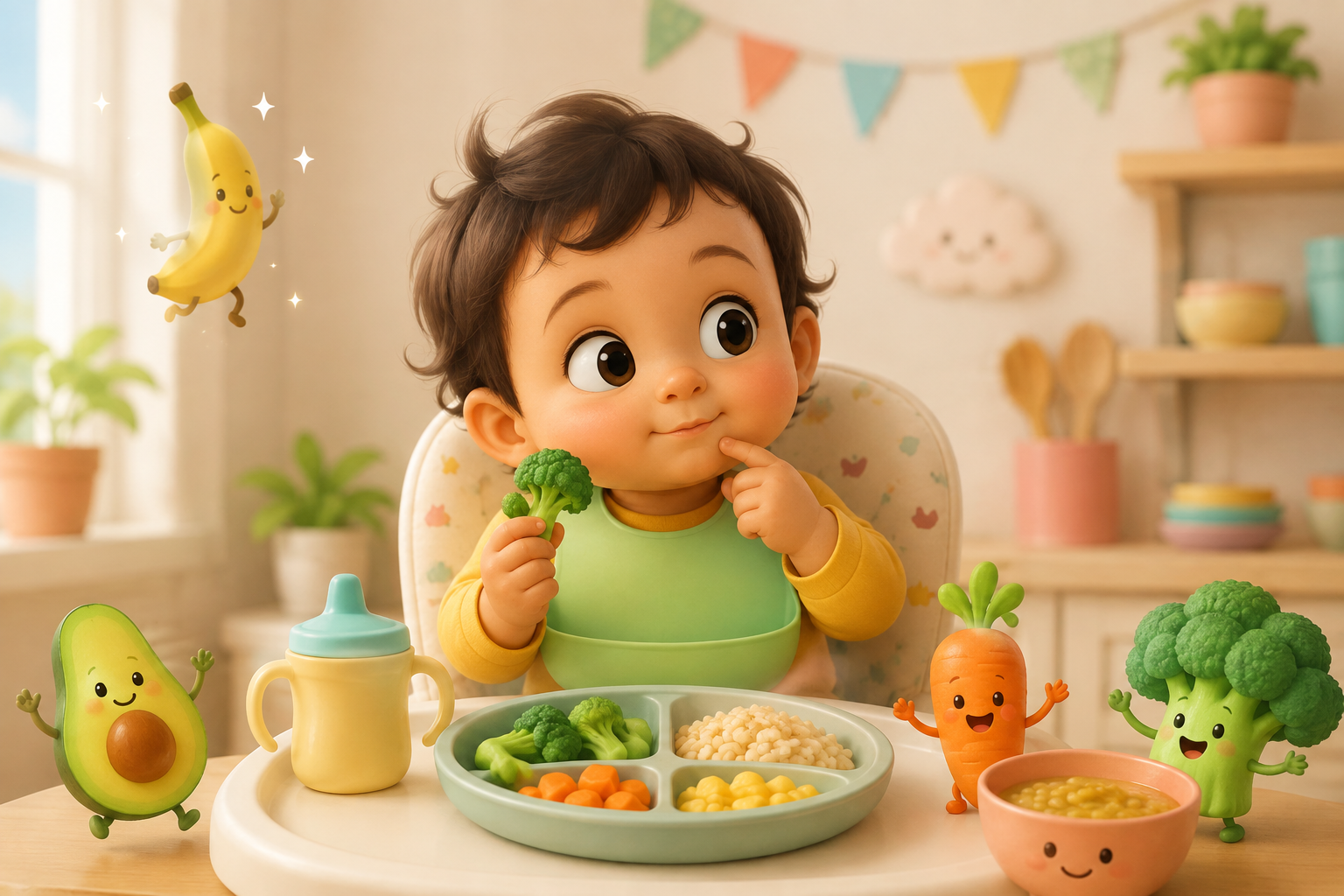
If your one-year-old has suddenly gone from a happy eater to someone who barely touches their plate, you’re not doing anything wrong — and you’re definitely not alone. Almost every parent hits this wall right around the first birthday, and it usually has very little to do with the food itself.
Quick answer: After 12 months, growth rate slows down significantly compared to the first year of life, so appetite naturally drops. A toddler who ate everything at 10 months may eat a fraction of that at 14 months — and it’s normal, not a red flag.
Quick Reference: Common Toddler Eating Changes (12–24 Months)
| What You’re Seeing | Why It Happens | What To Do |
|---|---|---|
| Eating much less than before | Growth slows after 1st birthday | Track intake over a week, not per meal |
| Loves a food one day, refuses it the next | Developing preferences and autonomy | Keep offering it without pressure |
| Rejects a favourite food out of nowhere | Normal part of toddler food exploration | Don’t remove it permanently — reintroduce later |
| Eats a huge lunch, skips dinner | Appetite is naturally irregular at this age | Offer a consistent meal/snack routine, let intake vary |
| Won’t try new foods | Food neophobia — peaks in toddler years | Offer new foods alongside familiar ones, repeatedly |
| Fussy after teething/illness | Temporary discomfort reduces appetite | Ease off pressure until they’re back to normal |
1. Food Intake May Decrease — And That’s Normal
This is the single biggest reassurance most parents need. Growth slows down after the first year, so it’s biologically normal for appetite to drop. Your toddler eating “well” one day and “barely anything” the next is not a pattern to panic over — it evens out over days, not meals.
What helps: Look at total intake across a week rather than judging each individual sitting. And resist the urge to make your toddler finish a plate sized for how much they used to eat.
2. Why Toddlers Reject Foods They Used to Love
This deserves its own section because it confuses parents more than almost anything else. A toddler can eat bananas happily for weeks and then refuse them outright — with no obvious trigger.
This is a normal part of toddlers developing independence and food preferences, not a sign the food was “always secretly disliked.” The fix isn’t to remove the food from rotation forever — it’s to keep offering it casually, alongside foods they already like, without turning it into a negotiation.
Key message: A rejected food today isn’t a disliked food forever.
3. Food Refusal Doesn’t Always Mean “Not Hungry”
Refusal at the table can come from several places that have nothing to do with appetite:
- Tiredness or overstimulation
- Testing independence (“I decide what goes in my mouth”)
- Texture dislike, not taste dislike
- Too many snacks or milk before the meal
- Teething, mild illness, or a disrupted routine
Treating every refusal as a hunger problem often leads to more snacking, more milk, and less appetite at the next real meal — a cycle worth avoiding.
4. Responsive Feeding: Give Toddlers Some Control
A simple framework that reduces mealtime battles:
- Parent decides: what food is offered, when, and where.
- Child decides: whether to eat, and how much.
Chasing a toddler around the house with a spoon, or turning every meal into a negotiation, usually backfires long-term — even when it “works” in the moment.
5. Keep Offering Rejected Foods (Repetition Really Works)
Toddlers often need many exposures — sometimes 10 or more — before accepting a new or previously rejected food. Changing the format can help without changing the ingredient:
- Steamed carrot → grated carrot → carrot paratha → carrot dosa
- Whole fruit → mashed → smoothie → mixed into a familiar dish
The goal is exposure without pressure — offering, not insisting.
6. Nutrient-Dense Over Big Portions
Since toddlers may genuinely eat small amounts, make what they do eat count rather than chasing plate size:
- Healthy fats (ghee, nut butters, avocado)
- Protein (dal, eggs, paneer, chicken)
- Whole grains and millets
- Iron-rich foods (a common gap in toddler diets)
- Fruits, vegetables, and dairy or suitable alternatives
7. Moving Toward Family Foods
By this stage, most toddlers can gradually transition to modified versions of family meals — softer texture, milder spice, less salt and added sugar — rather than a separate toddler-only menu at every meal. This also reduces the pressure of cooking two meals when a toddler refuses the family plate.
What to Avoid at Mealtimes
| Avoid | Why |
|---|---|
| “Just one more bite” | Overrides the child’s own fullness cues |
| Forcing food into the mouth | Can create long-term food aversion |
| Bribing with sweets | Teaches food-as-reward, not hunger-as-signal |
| Comparing eating to another child | Adds pressure without changing appetite |
| Offering a new alternative after every refusal | Removes incentive to eat what’s on the plate |
When to Seek Help
Appetite swings and pickiness are common — but check in with a paediatrician or feeding specialist if you notice:
- Poor weight gain or growth concerns
- Choking, gagging, or persistent difficulty chewing/swallowing
- Extreme, prolonged restriction to only a handful of foods
- A sudden, unexplained, and lasting drop in eating
FAQs
Why is my toddler suddenly eating so much less after turning 1? Growth rate slows significantly after the first birthday, so appetite naturally decreases compared to infancy. This is expected and not usually a sign of a problem.
My toddler used to love a food and now refuses it — is this normal? Yes. Developing food preferences and testing independence often show up as sudden rejection of previously loved foods. Keep offering it without pressure instead of removing it permanently.
How many times should I offer a food my toddler rejected? Many toddlers need repeated exposure — often 8-10+ tries — before accepting a new or previously refused food. Presenting it in a different form can help.
Should I force my toddler to finish their plate? No. Forcing or pressuring eating can create food aversion over time. Responsive feeding — where the parent offers and the child decides how much to eat — is generally recommended.
When should I worry about my toddler’s eating? Speak to a paediatrician if there’s poor weight gain, choking or swallowing difficulty, extreme food restriction, or a sudden and prolonged change in eating habits.
Setting up a toddler feeding station or upgrading gear as your little one moves to family meals? IPF’s marketplace has gently-used high chairs, weaning sets, and toddler feeding essentials — with escrow protection and doorstep pickup/drop, so you can upgrade without the guesswork.