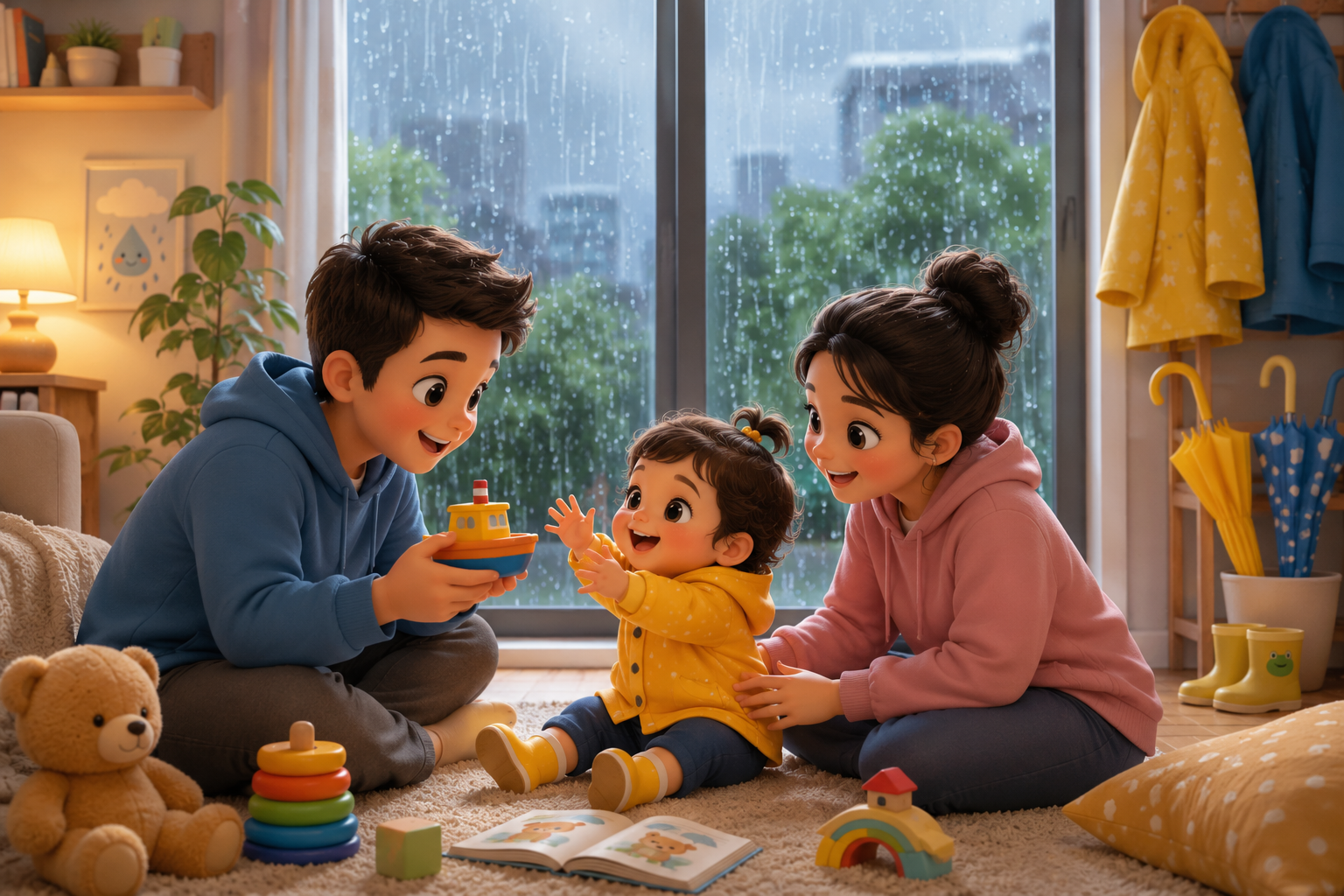
Monsoon in India isn’t just a season change for babies — it’s a full routine overhaul. Humidity spikes, temperatures swing between sticky afternoons and chilly evenings, and suddenly the oil, clothes, and gear that worked all summer stop making sense.
We pulled the most-asked monsoon questions from the IPF parent community — the oil-switch debate, the “how do I even get my toddler into a jacket” struggle, and everything in between — and turned them into this practical, no-fluff guide.
1. Should You Really Switch from Coconut Oil to Sesame Oil?
This is the single most-asked question in the IPF community every monsoon. Here’s the honest breakdown:
- Coconut oil feels cooling on the skin— ideal for summer, but it can feel too cold on baby’s skin during damp, chilly monsoon mornings and may slow absorption in humid air.
- Sesame (til) oil is warming, penetrates skin well even in humidity, and is traditionally used across North and West India specifically for monsoon and winter massage.
- Many pediatricians note either oil is fine skin-wise — the switch is more about comfort and traditional practice than a strict medical necessity. If your baby has sensitive or eczema-prone skin, patch-test sesame oil on a small area first, since it’s a common allergen.
Practical rule of thumb: if your baby feels cold to touch after a coconut oil massage, or you live somewhere monsoon temperatures dip noticeably, switch to sesame oil (or a cold-pressed sesame-coconut blend) for the season.
2. Do a Full Wardrobe Swap, Not Just a Few Additions
Don’t just add jackets on top of summer clothes — actually rotate the wardrobe:
- Prioritize full-sleeve cotton over sleeveless — mosquito bites spike in monsoon and full coverage helps.
- Keep 2–3 quick-dry outfit changes on hand; monsoon humidity means clothes don’t dry as fast, and a soaked outfit needs replacing quickly to avoid chafing.
- Avoid heavy synthetic fabrics — they trap moisture against skin and worsen heat rash even in cooler weather.
A lot of monsoon wardrobes are only worn for 6–8 weeks — this is exactly the kind of gently-used lot that shows up often in the IPF preloved marketplace at a fraction of retail price.
3. The Toddler-Won’t-Wear-a-Jacket Problem (And How Parents Are Solving It)
This comes up constantly in IPF parent group conversations. What’s actually working for parents:
- Let them pick it. Involve the toddler in choosing the jacket color/print at the time of purchase — ownership reduces resistance later.
- Practice indoors first. Have them wear it for 10 minutes while playing at home, with zero pressure to go outside — removes the “jacket = leaving the house” association.
- Layer instead of bulk. A thin full-sleeve tee under a light zip-up jacket is easier to tolerate than one thick layer.
- Make it a “superhero cape” moment — for 2–4 year-olds, framing the jacket or raincoat as a costume piece works surprisingly well.
- Skip the itchy scarf. Swap wool/synthetic scarves for a soft cotton snood or a hooded jacket with a built-in collar — most toddler scarf resistance is a texture issue, not a temperature one.
4. Rainwear That Actually Works for Under-5
- Choose a hooded raincoat with reflective strips, not an umbrella — toddlers can’t manage an umbrella and stay dry.
- PVC-free, breathable rain shells prevent the “sweaty greenhouse” effect inside cheap plastic raincoats.
- Pair with closed-toe, quick-dry shoes — sandals in puddle water are a top cause of fungal foot infections in this season.
5. Adjust Bath Time, Not Just Bath Products
- Slightly warm (not hot) water year-round, but shorten bath time in monsoon to avoid prolonged skin exposure to humidity right after.
- Pat dry thoroughly in skin folds (neck, thighs, underarms) — this is where monsoon fungal rashes start.
- Follow with a light, non-greasy moisturizer rather than a heavy oil if the room already feels humid.
6. Watch the Diaper Rash Window Closely
Humidity plus reduced airflow = more diaper rash. Change diapers every 2–3 hours instead of the usual 3–4, and let baby have some diaper-free time on a waterproof mat when possible.
7. Keep a Monsoon-Specific First Aid & Wellness Kit
Cold, cough, and fever are more common as temperatures fluctuate. Keep on hand: a digital thermometer, saline nasal drops, pediatrician-approved fever medication, and a humidifier or steam option for congestion — check dosing with your pediatrician before use.
8. Mosquito Protection Without Harsh Chemicals
- Use physical barriers first — mosquito nets over cribs/prams — before topical repellents.
- If using a repellent, choose one explicitly labeled safe for your baby’s age group.
- Full-sleeve clothing (see Tip #2) is your first line of defense.
9. Fungal Infection Prevention in Skin Folds
Damp skin folds are a monsoon hotspot for fungal rashes. Use a light, breathable powder or barrier cream specifically in neck, underarm, and thigh folds, and ensure clothes are completely dry before dressing baby.
10. Manage Room Humidity, Not Just Baby’s Body
A damp nursery encourages mold and dust mites. Ventilate well, use a dehumidifier if your city gets heavy monsoon (Mumbai, Chennai, Kolkata especially), and avoid drying baby clothes indoors in the same room baby sleeps in.
11. Footwear: Closed, Not Covered
Fully closed shoes trap moisture; fully open sandals expose feet to puddle contamination. The sweet spot is a quick-dry closed shoe with drainage or breathable mesh — many baby shoe brands now make monsoon-specific pairs.
12. Rethink the Diet — Warm, Simple, Immunity-Friendly
For babies on solids, lean toward warm, freshly cooked meals over raw salads or cut fruit that’s been sitting out — monsoon humidity speeds up bacterial growth. Include vitamin C-rich fruits and iron-rich foods to support seasonal immunity.
13. Sanitize Toys and High-Touch Surfaces More Often
Humidity extends how long germs survive on surfaces. Wipe down toys, high chairs, and play mats more frequently than your usual routine, especially if baby is teething and mouthing objects often.
14. Stroller and Baby Gear Maintenance
Monsoon is hard on gear — check stroller wheels and fabric for mold after repeated rain exposure, and dry out car seats and carriers fully before next use. A quick weekly wipe-down prevents long-term fabric damage and odor.
15. Build a Realistic Outdoor Routine, Don’t Skip It Entirely
Avoid the trap of keeping baby indoors the whole season. Short, well-timed outdoor windows (right after a rain break, avoiding peak drizzle) with the right rain gear support vitamin D levels and mood — just plan around weather apps rather than a fixed schedule.
Monsoon Baby Care FAQs
Is coconut oil bad for babies in monsoon? No, it’s not bad — it’s just less suited to cooler, damp weather because many parents find it feels cold on the skin during humid, chilly mornings. Many parents switch to sesame oil purely for comfort during monsoon, then switch back in summer.
What should a baby wear during monsoon in India? Full-sleeve breathable cotton as a base layer, with a light jacket and hooded, breathable raincoat for outdoor trips. Avoid heavy synthetic fabrics that trap moisture.
How can I make my toddler wear a jacket or scarf without a fight? Let them choose the jacket, practice wearing it indoors without pressure to go outside, use layering instead of one bulky piece, and swap itchy scarves for a soft cotton snood or hooded collar.
How often should I change my baby’s diaper in monsoon? Every 2–3 hours, more frequently than the typical 3–4 hour summer routine, since humidity raises diaper rash risk.
Do babies need a humidifier or dehumidifier in monsoon? It depends on your city’s humidity levels — a dehumidifier helps in very humid coastal cities to prevent mold and fungal growth in the nursery; a humidifier is more useful in drier monsoon regions or for congestion relief.
Where IPF Parents Find Monsoon Gear Without Overspending
Monsoon-specific baby gear — raincoats, jackets, closed shoes, oils — often gets used for a handful of weeks before baby outgrows it. On IPF, other parents list this barely-used gear for free (sellers don’t pay listing fees, only a small buyer-side commission applies), with in-app escrow so payment is protected until you’ve received and checked the item, plus doorstep pickup and drop so you’re not making extra monsoon trips out.
Browse the current monsoon baby gear listings on IPF, or list what your own baby has outgrown from last season.