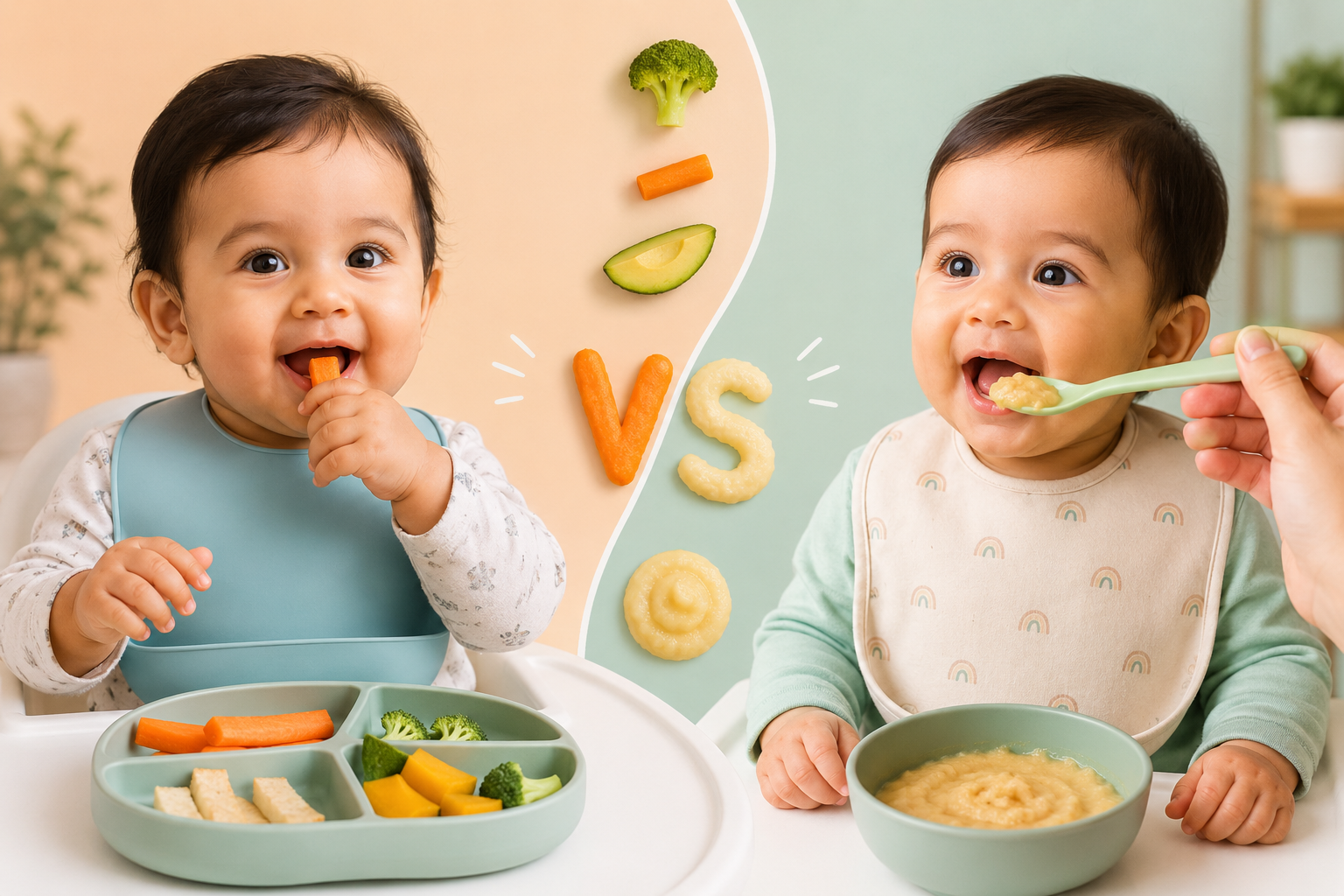
Starting solids is one of the biggest milestones in your baby’s first year — and also one of the most debated. Scroll through any parenting group and you’ll find two camps: the baby-led weaning (BLW) parents handing their six-month-old a steamed carrot stick, and the traditional weaning parents carefully spoon-feeding purees one small bite at a time.
So which one is actually right for your baby?
The honest answer: there isn’t a single correct choice. Both methods are backed by pediatric guidance, both have real trade-offs, and a growing number of Indian parents are landing somewhere in between. In our community polls on IPF, feeding method is one of the most argued-about topics among first-time parents — right up there with sleep training.
This guide breaks down what each method actually involves, where they differ, what real parents say about the mess-vs-independence trade-off, and how to decide (or combine both) based on your baby and your household.
What is Baby-Led Weaning?
Baby-led weaning is a feeding approach where your baby skips purees almost entirely and goes straight to self-feeding soft, appropriately-sized finger foods from around 6 months. You offer the food; your baby decides how much to eat, how fast, and in what order.
Typical BLW starter foods:
- Steamed carrot sticks
- Avocado slices
- Ripe banana spears
- Soft idli strips
- Toast fingers
- Sweet potato wedges
There’s no spoon-feeding involved in classic BLW — the baby is doing all the picking up, gumming, and chewing (even before teeth show up).
What is Traditional Weaning?
Traditional weaning is the more familiar route most of us grew up with: purees and mashed foods first, spoon-fed by a parent, gradually progressing to lumpier textures and finger foods over weeks and months.
Typical traditional weaning starter foods:
- Rice cereal
- Dal puree
- Mashed vegetables
- Fruit purees (apple, pear, banana)
- Khichdi mash
The parent controls the pace, the spoon, and — largely — how much goes in.
Baby-Led Weaning vs Traditional Weaning: Quick Comparison
| Feature | Baby-Led Weaning | Traditional Weaning |
|---|---|---|
| Feeding style | Self-feeding | Spoon feeding |
| Starting texture | Finger foods | Purees first |
| Who controls intake | Baby | Parent |
| Mess level | High | Moderate |
| Motor skill development | Excellent | Moderate |
| Parent involvement during meals | Lower (hands-off) | Higher (hands-on) |
| Transition to family meals | Earlier | Usually later |
| Best for | Confident, exploratory eaters | Anxious parents, closer monitoring needs |
What Our Community Says
We polled parents on IPF’s Instagram community about which method they actually stuck with — and the results reflect what pediatric feeding specialists have long said: most families don’t pick a side, they blend.
A recurring theme in the comments: parents who started strictly BLW often admitted to keeping a puree “backup” for tired evenings, while traditional-weaning parents said they introduced finger foods earlier than planned simply because their baby kept reaching for their plate. Mess tolerance and grandparent involvement came up repeatedly as the real deciding factor for Indian households — more on that below.
Benefits of Baby-Led Weaning
- Encourages independence — baby learns to self-regulate meals from the start
- Builds fine motor skills through the pincer grasp and hand-to-mouth coordination
- Improves hand-eye coordination
- Introduces varied textures early, which some research links to fewer feeding issues later
- Helps babies recognise hunger and fullness cues, since no one is urging “one more bite”
- Makes family mealtimes easier — baby can often eat modified versions of what everyone else is having
Benefits of Traditional Weaning
- Easier for anxious parents — you can see exactly what and how much went in
- Better control over food intake, useful for babies with weight or growth concerns
- Helpful for babies needing closer monitoring (e.g., reflux, allergies flagged by a pediatrician)
- Less messy — a genuinely underrated factor for smaller kitchens or joint families sharing cleanup duties
- Easier to front-load iron-rich purees, important around the 6-month mark when iron stores start dropping
Challenges of Baby-Led Weaning
- Meals get messy — expect food on the floor, walls, and baby
- Many parents feel initial anxiety, especially around gagging (which is normal and different from choking)
- Higher food wastage in the early weeks
- Requires patience — it can take longer for baby to actually eat a meaningful amount
- Needs some upfront learning about safe food shapes, sizes, and textures
Challenges of Traditional Weaning
- Baby may lean on spoon-feeding longer, delaying self-feeding skills
- Texture acceptance can take longer if purees continue too long
- Parent-led pacing can unintentionally override a baby’s own fullness cues if feeding isn’t responsive
Can You Combine Both Methods?
Yes — and pediatricians increasingly recommend exactly this. A mixed approach lets you keep the control of traditional weaning where it matters (iron-rich purees, monitoring intake) while still giving your baby hands-on exploration time.
A sample mixed-approach day:
| Meal | Approach |
|---|---|
| Breakfast | Mashed oats (spoon-fed) |
| Lunch | Soft vegetable sticks (self-fed) |
| Dinner | Khichdi with self-fed fruit pieces on the side |
This isn’t “doing it wrong” — it’s one of the most common real-world patterns among the parents in our community.
Safety Tips for Starting Solids
Regardless of the method you choose:
- Wait until around 6 months, and ideally after a pediatrician check-in
- Baby should be able to sit with minimal support
- Never leave your baby unattended while eating
- Learn to tell the difference between gagging (normal, noisy, self-resolving) and choking (silent, needs help)
- Avoid honey before 12 months
- Avoid whole grapes, nuts, popcorn, and other classic choking hazards — cut, mash, or cook accordingly
- Introduce common allergens one at a time, as advised by your pediatrician
Signs Your Baby is Ready for Solids
- Sits with support and has good head control
- Has lost the tongue-thrust reflex (no longer pushes food straight back out)
- Shows genuine interest in food — watching you eat, reaching for your plate
- Can bring objects to their mouth reasonably well
Which Method Should You Choose?
Consider Baby-Led Weaning if:
- You enjoy including baby in family meals from early on
- You’re comfortable with mess and a slower eating pace
- Your baby seems eager to explore food independently
Consider Traditional Weaning if:
- You prefer a gradual, controlled progression
- Your pediatrician has recommended closer monitoring
- You’d rather start with purees and build up texture over time
Many families in the IPF community land on a hybrid — and that’s a completely valid, pediatrician-supported choice, not a compromise.
Frequently Asked Questions
Is Baby-Led Weaning safe? Yes. When started around 6 months with appropriately sized, soft foods and close supervision, BLW is considered safe by pediatric guidelines.
Does Baby-Led Weaning increase choking risk? Current research suggests that BLW, when practiced correctly with suitable food shapes and textures, does not increase choking risk compared with traditional weaning. That said, all babies can choke regardless of method, so safe food prep and supervision are non-negotiable either way.
Can I mix BLW and spoon feeding? Absolutely — a mixed approach is common and lets you draw on the strengths of both methods.
When should babies start solids? Most babies are ready around 6 months, but readiness varies and should ideally be confirmed with a healthcare professional.
What foods should I avoid? Honey before 12 months, whole nuts, whole grapes, popcorn, hard candies, and any other classic choking hazards.
Conclusion
Whether you go with Baby-Led Weaning, Traditional Weaning, or a mix of both, the underlying goal is the same — helping your baby build a healthy, low-stress relationship with food. Follow your baby’s cues, prioritize safety over speed, and remember every child paces this differently. If you have concerns about growth or feeding, your pediatrician is always the right first call.
Gear Up for Whichever Method You Choose
Whether you’re stocking up on silicone-tipped spoons for traditional weaning or a suction bowl and bib set for the inevitable BLW mess, you don’t need to buy everything brand new. On IPF, parents list gently-used high chairs, feeding sets, and bibs for free — you only pay a small commission as a buyer, every purchase is escrow-protected until it reaches you, and doorstep pickup/drop makes it easy to swap gear as your baby outgrows each stage.
Related reads:
- Best High Chairs in India
- Introducing Solids: The Tools & Gear You’ll Actually Use
- Starting Solids — What Worked (and What Didn’t)