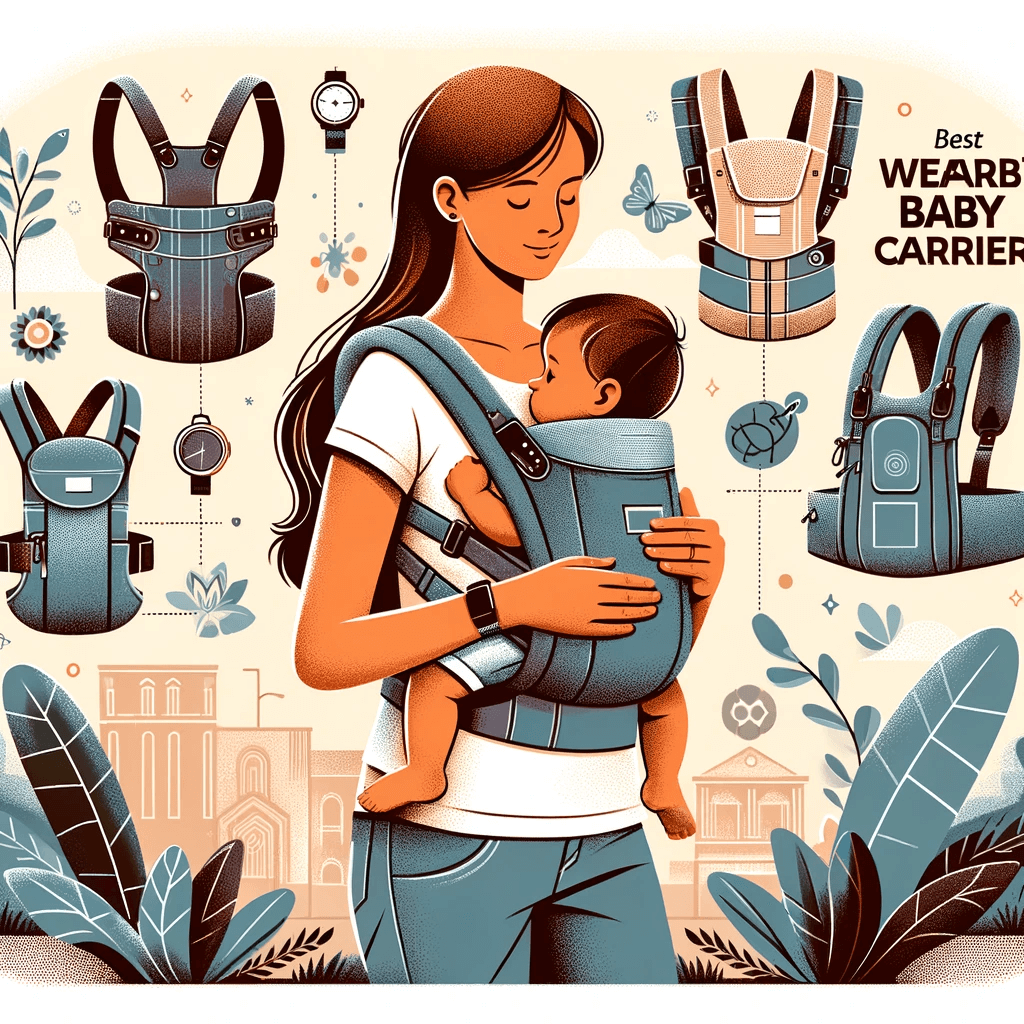
Choosing a baby carrier sounds simple until you’re standing in front of fifteen options online, reading reviews written for parents in completely different climates with completely different commutes.
So instead of writing another roundup based on spec sheets, we went to the IPF community and asked one question: Which baby carrier did you actually use and love?
The responses came pouring in — and the honest answers were far more useful than any product listing. Here’s what real Indian parents recommended, along with what worked, what didn’t, and who each carrier is best for.
The Carriers Parents Recommended
1. Ergobaby
Best For: Everyday use, newborns, parents who carry frequently | Price: ₹12,000–18,000
Ergobaby was the single most-mentioned carrier in our community poll — recommended by multiple parents independently. That kind of unprompted consensus is hard to fake.
The brand’s reputation is built on ergonomic design that supports the baby’s M-position (knees higher than hips), which is recognised by the International Hip Dysplasia Institute as promoting healthy hip development. The Omni 360 and Omni Deluxe models don’t require a separate newborn insert — the carrier adjusts to newborn mode directly, which makes it genuinely usable from birth.
For Indian parents, the mesh versions handle moderate heat reasonably well, though no structured carrier is ideal in peak 40°C+ summers. The waistband distributes weight well across most adult body types.
The honest downside: the price. At ₹12,000–18,000, it’s a significant investment, and many parents only realise its worth after outgrowing a cheaper option first.
Pros:
- No infant insert needed (Omni series)
- Excellent weight distribution for long carries
- Multiple carry positions including back carry
- Internationally certified for hip health
- Durable — lasts across multiple children if cared for well
Cons:
- Expensive, especially for a first-time buyer
- Imported sizing — may feel bulky on smaller Indian frames
- Warmer than sling-style carriers in summer
Suitable age: Newborn to ~4 years (model-dependent)
2. R for Rabbit Hug Me
Best For: Budget-conscious parents who don’t want to compromise on ergonomics | Price: ₹3,000–5,000
R for Rabbit is one of India’s most recognised baby gear brands, and the Hug Me carrier is their flagship ergonomic option. Community members recommended it as the best mid-range choice for parents who want M-position support without the Ergobaby price tag.
It fits a wide range of Indian parent body types well — the adjustable waistband and shoulder straps are designed with South Asian builds in mind, which makes a real difference compared to imported carriers sized for Western frames. Lighter and more maneuverable in autos, crowded markets, and public transport — everyday realities for most Indian parents.
The mesh panels provide decent ventilation for most of the year, though summer comfort is still limited compared to a simple sling.
Pros:
- Best ergonomic carrier in the ₹3,000–5,000 range
- Fits Indian body types well
- Comfortable for both front and back carry
- Widely available (Amazon, FirstCry, Flipkart)
- Good for parents sharing carry duties
Cons:
- Not newborn-ready without an infant insert (suitable from ~4 months)
- Less durable long-term than premium options
Suitable age: 4 months to 2 years (up to 15 kg)
3. Soulslings Lali
Best For: Travel, parents who want a compact, lightweight carrier | Price: ₹4,000–4,500
Soulslings is an Indian brand — and the Lali is their most popular entry-point carrier. At under 400g, it folds down small enough to slip into a regular bag, making it genuinely practical for parents who carry the carrier as much as they carry the baby.
Made from 100% cotton, the Lali is breathable and soft on both baby and parent’s skin — a meaningful advantage in Indian weather. It’s breastfeeding-friendly and machine washable, two things parents asked about a lot in our community thread.
The honest caveat: a few parents in our community noted that the Lali’s padding is minimal and it lacks a lumbar support pad. For longer carries or heavier babies, Soulslings’ own Aseema model (₹5,500–6,000) is a significant step up in comfort. The Lali shines for parents who want a lightweight backup carrier or a travel option.
Pros:
- Ultra-lightweight and packable
- 100% cotton — breathable, gentle on skin
- Indian brand with good after-sales support
- Machine washable
- Works from 4 months to 24 months
Cons:
- Minimal padding — less comfortable for long carries
- No lumbar support
- Limited for babies above 1 year
Suitable age: 4 months to 24 months (4–15 kg)
4. Mee Mee
Best For: First-time parents, short durations, budget starters | Price: ₹1,200–2,000
Mee Mee is a household name in Indian baby care, and the carrier was recommended by parents who wanted something simple and affordable for occasional use — evening walks, short trips, contact naps at home.
It’s not an ergonomic structured carrier in the same league as Ergobaby or R for Rabbit, but for parents who are just getting started with babywearing and aren’t sure how much they’ll use it, Mee Mee offers a low-stakes entry point. Widely available, easy to return, and familiar enough that any relative can help you put it on.
Pros:
- Very affordable
- Widely available offline and online
- Simple to use — low learning curve
- Adequate for short carries
Cons:
- Not ergonomically designed for M-position
- Limited weight distribution
- Not recommended for long daily carries or heavy babies
Suitable age: 0–12 months (check specific model for weight limit)
5. Babyhug
Best For: Budget parents wanting a structured carrier | Price: ₹1,500–2,500
Babyhug is FirstCry’s in-house baby brand and a strong recommendation from parents who wanted an affordable structured carrier with basic ergonomic features. It offers front and back carry positions and is more structured than Mee Mee, making it a step up in comfort for parents who plan to carry regularly.
The brand’s accessibility (available across every FirstCry outlet in India) and return/exchange policy make it a low-risk first purchase.
Pros:
- Affordable structured carrier
- Front and back carry positions
- FirstCry availability — easy to buy and return
- Better weight distribution than basic slings
Cons:
- Quality inconsistency reported across batches
- Less durable than premium options
Suitable age: Varies by model — typically 3 months to 2 years
6. Infantino
Best For: Mid-range ergonomic carry, parents comparing Indian vs international brands | Price: ₹2,500–3,500
Infantino’s Flip 4-in-1 Convertible Carrier was a recommendation from IPF community members looking at the mid-range bracket. It offers four carry positions, an ergonomic seat, and head support — putting it genuinely between entry-level Indian brands and premium imports like Ergobaby.
For parents who want more than Mee Mee or Babyhug without jumping to Ergobaby’s price point, Infantino is a credible middle ground.
Pros:
- Four carry positions
- Ergonomic seat and head support
- Good price-to-feature ratio
- Adjustable for most parent body types
Cons:
- Build quality not at par with Ergobaby
- Less available offline than Indian brands
Suitable age: 3.6 kg to 14.5 kg
Which Baby Carrier Should You Choose?
If your baby is a newborn: → Ergobaby Omni series (no insert needed) or Soulslings Lali (from 4 months)
If you’re on a budget under ₹2,000: → Mee Mee or Babyhug for occasional use; set expectations accordingly
If you want the best mid-range option: → R for Rabbit Hug Me — the most balanced carrier for Indian parents at ₹3,000–5,000
If you travel frequently or commute by auto/metro: → Soulslings Lali — the only one that fits in your bag
If you plan to carry daily for 2+ years: → Invest in Ergobaby — the back and hip support will justify the cost
If you’re in a hot and humid climate: → Any mesh variant; avoid padded structured carriers for peak summer
Common Questions Parents Asked
Are baby carriers safe for newborns? Yes, when used correctly. Look for carriers with newborn mode or infant insert. Key rule: always follow the T.I.C.K.S. guidelines — Tight, In view at all times, Close enough to kiss, Keeping chin off chest, Supported back.
What is the T.I.C.K.S. rule? T.I.C.K.S. is a widely used babywearing safety checklist: Tight (snug, no slumping), In view (baby’s face always visible), Close enough to kiss (baby’s head near your chin), Keeping chin off chest (airway open), Supported back (M-position, no curled spine).
How many hours can a baby stay in a carrier? Most experts suggest 1–2 hours at a stretch with breaks. Always monitor your baby’s temperature and positioning.
Can baby carriers cause hip problems? Incorrectly used carriers can. Look for the M-position (knees higher than bottom) and IHDI certification. Dangling legs or narrow seat carriers are the main risk.
Is a baby carrier better than a stroller? Different tools for different jobs. Carriers are better for crowded spaces, bonding, contact naps, and commutes. Strollers work better for longer outings, when the baby is older and heavier, or when you need your hands free for extended periods. Many parents use both — and preloved options for both are available on IPF.
What Parents Wish They Knew Before Buying
From the IPF community thread, a few things came up again and again:
- Don’t buy based on influencer posts alone. The carrier they’re wearing was often gifted, and they may not carry daily the way you do.
- Indian summers are real. Test any carrier before a long outing. Even the best-ventilated carriers get warm when you’re outdoors at noon.
- Your partner’s comfort matters. If both of you will wear the carrier, check that it adjusts to both your sizes before purchasing.
- A cheaper carrier isn’t automatically a waste. For parents who end up not enjoying babywearing, a ₹1,500 Babyhug that gets used twice is a better decision than a ₹15,000 Ergobaby gathering dust.
- Preloved carriers are a smart buy. Baby carriers have limited use periods — most babies outgrow them in 18–24 months. A gently used premium carrier at half the price is often better than a new budget one.
Find Preloved Baby Carriers on IPF
Many of the carriers mentioned in this post — Ergobaby, R for Rabbit, Soulslings — are listed by parents in the IPF community once their babies outgrow them. Since listing is free for sellers and the platform includes doorstep pickup and in-app escrow payments, it’s one of the easiest ways to buy or sell baby gear in India.
Browse preloved baby carriers on IPF →