We’ve all been there. A reel pops up on Instagram, an influencer holds up a bright, colourful toy and says “this changed everything for us” — and before you know it, you’ve added it to your cart. It arrives, your child is excited for three days, and then it joins the growing pile in the corner that nobody touches anymore.
Sound familiar?
The problem isn’t that you’re a bad shopper. The problem is that most toys are designed to be exciting for a moment, not useful for years. And in India, where every family visit brings a new toy into the house and storage space is limited, that pile adds up fast.
The solution isn’t buying less. It’s buying smarter — choosing toys that grow with your child across multiple stages, so you’re not replacing the same toy every six months.
What Does “A Toy That Grows With Your Child” Actually Mean?
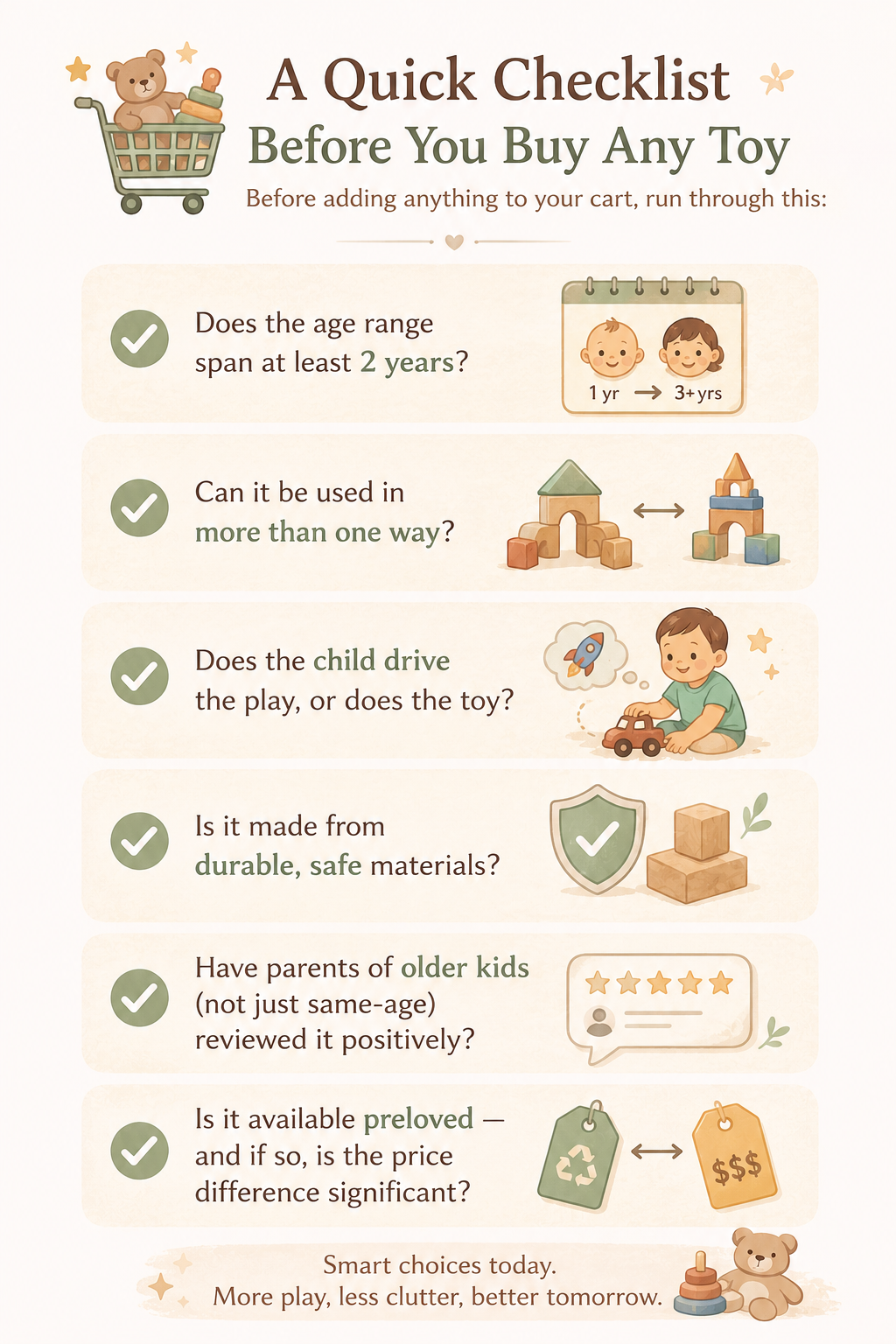
Not every toy deserves a permanent spot in your home. A truly age-flexible toy does at least three of the following:
- Works across multiple developmental stages (infant, toddler, preschooler)
- Can be used in different ways at different ages
- Encourages open-ended play — no single right answer or outcome
- Supports creativity, problem-solving, or physical development
- Stays interesting longer because the child’s imagination drives the play, not a battery
The classic example? Wooden blocks.
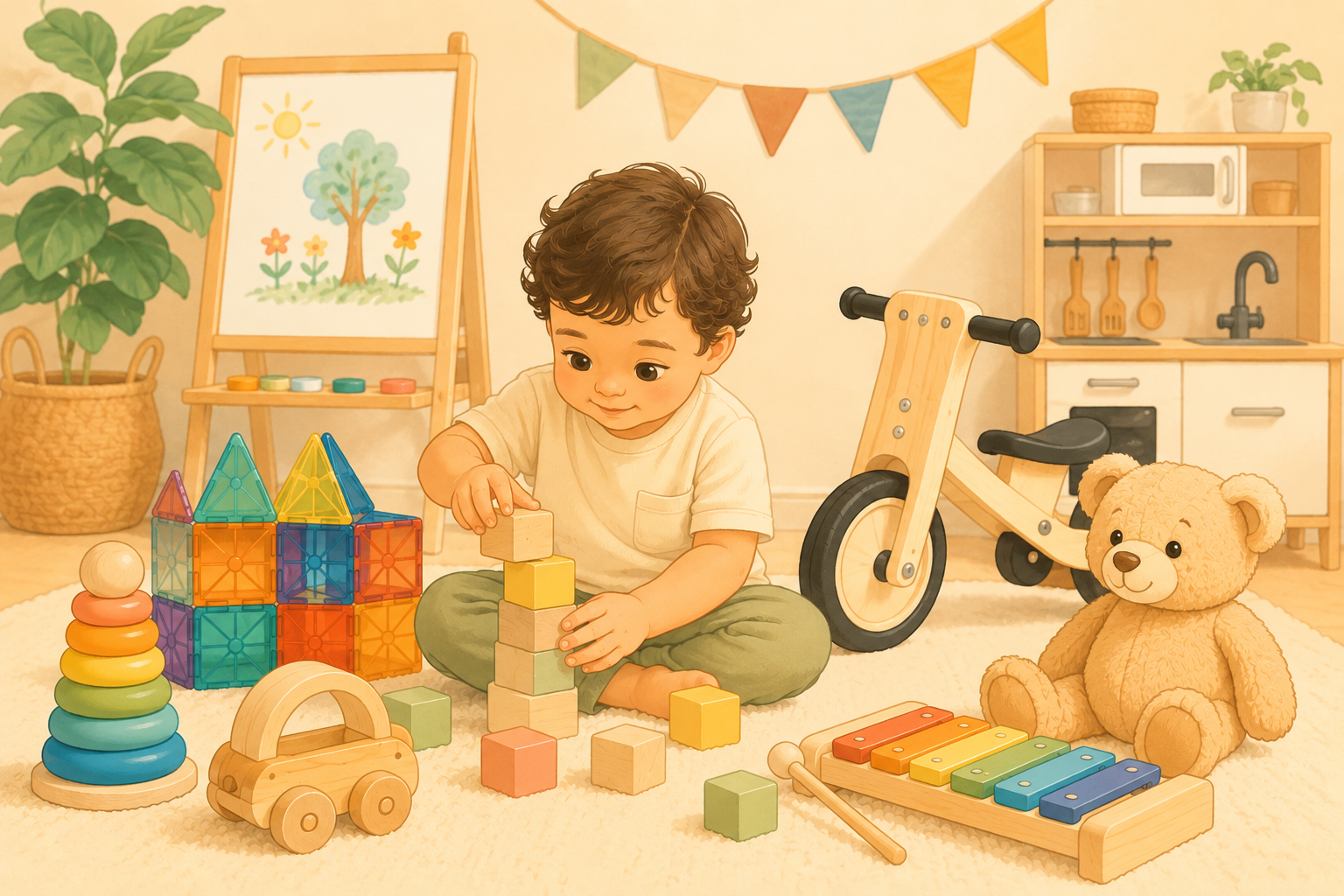
A 9-month-old mouths them and bangs them together. An 18-month-old stacks and knocks them down. A 3-year-old builds towers, roads, and houses. A 5-year-old uses them imaginatively with other toys. Same toy, years of use, zero batteries required.
Why Long-Lasting Toys Are Worth the Upfront Investment
1. You Spend Less Over Time
It feels counterintuitive — spending ₹2,000 on a quality toy versus ₹400 on a plastic one — but the math works out. A toy your child uses from age 1 to 4 costs you far less per month than three cheap toys replaced every few months. And when your child finally outgrows it, platforms like IPF let you resell and recover a significant part of that cost.
2. Less Clutter, Calmer Home
Research in child development consistently shows that fewer, better toys actually lead to deeper, more focused play. Too many options overwhelm toddlers and reduce engagement. A curated toy shelf beats an overflowing one, every time.
3. Better for Your Child’s Development
Open-ended toys — blocks, stacking toys, art supplies, pretend play sets — are associated with stronger language development, longer attention spans, and better problem-solving. This isn’t marketing copy; it’s what developmental paediatricians and Montessori educators recommend.
4. More Sustainable (and That Matters)
Every toy that gets used for three years instead of three weeks is one less piece of plastic in a landfill. Buying preloved and reselling when done doubles that impact. It’s a small choice that adds up across millions of Indian households.
5 Types of Toys That Actually Grow With Your Child
1. Building Toys
Building toys are arguably the single best long-term investment in your toy collection. Babies as young as 6 months are fascinated by stacking and knocking over — and that fascination genuinely doesn’t go away, it just evolves.
Best options:
- Wooden unit blocks — classic, durable, endlessly versatile
- Mega Blocks — great for 1–3 year olds, big enough to be safe
- LEGO DUPLO — bridges toddler and preschool stages beautifully
- Magnetic tiles — flat-pack at rest, incredible for 3D structures later
👉 [Check parent-recommended building toys on IPF]
2. Ride-On Toys and Balance Bikes
Toddlers are built to move. Between ages 1 and 4, ride-on toys serve a crucial developmental function — building core strength, balance, and spatial awareness.
What makes these particularly smart buys is that they tend to be expensive when purchased new and in excellent condition when resold — because kids don’t misuse them the way they do smaller toys. Preloved ride-ons on IPF often look nearly new.
Age-flexible options:
- Push-along ride-ons (12–18 months)
- Convertible tricycles with parent handle (18 months–3 years)
- Balance bikes — no pedals, teaches balance before cycling (2–5 years)
- Scooters with adjustable height (3 years and up)
3. Pretend Play Sets
Around 18 months, children begin to imitate the world around them. A toy kitchen, a doctor’s kit, a small tool set — these become the centrepiece of play for years. The scenarios your child creates become increasingly complex as they grow: a 2-year-old makes coffee, a 4-year-old runs a full restaurant.
Good investments in this category: kitchen sets, doctor kits, tea sets, tool boxes, shopping baskets.
4. Art and Creative Supplies
Creative materials are naturally self-scaling. A 2-year-old scribbles with fat crayons. A 4-year-old draws recognisable figures. A 6-year-old plans a full picture. Same supplies, completely different engagement level.
What to stock:
- A sturdy double-sided easel (lasts years, works with paper, magnetic board, and chalk)
- Washable crayons and paints
- Magnetic drawing boards for mess-free creative play
- Reusable craft kits
5. Open-Ended Montessori Toys
This category has grown significantly in Indian parenting communities over the past few years, and for good reason. Montessori-aligned open-ended toys have no single correct outcome — the child decides what to do with them.
- Rainbow stackers (Grimm’s-style arches)
- Pickler triangles
- Loose parts play sets
- Sensory bins
These tend to be more expensive when bought new — making them ideal candidates for preloved buying.
Red Flags: Toys to Think Twice About
Not all toys are equal. Some are designed specifically to be marketed to parents, not to benefit children. Here are the patterns to watch for:
- Single-function battery toys — press a button, it makes a noise. Entertaining for two minutes. Developmentally thin.
- Highly character-specific toys — tied to a current film or show, instantly dated once that phase passes
- Trend-based impulse purchases — the Instagram-famous toy of the month that every influencer is featuring
- Age-locked gimmick toys — designed for a very narrow window, often 3–6 months of actual interest
If a toy requires a parent’s involvement to stay interesting, it’s probably not independently engaging enough for long-term value.
How IPF Helps You Build a Smarter Toy Collection
India Parenting Forum’s buy/sell platform exists precisely for this — a trusted space where parents can:
- Buy quality toys at significantly lower prices than retail
- Sell toys their children have outgrown, recovering part of the original cost
- Try expensive toys (Montessori sets, magnetic tiles, wooden toys) without the full retail risk
- Give well-loved toys a second life with a family that will actually use them
Every purchase on IPF comes with secure in-app chat, escrow-protected payments, and platform-managed shipping — so you’re not navigating unknown sellers alone.
The Bottom Line
Your child doesn’t need a hundred toys. They need the right toys — ones that challenge them, grow with them, and stay interesting as their imagination expands.
Choose fewer toys. Choose better toys. And when the time comes to let go of one, pass it on to another parent who needs it.
Before buying new, check if another parent is reselling it on IPF. Your next favourite toy might already be waiting.
👉 [Browse preloved toys on IPF]