Quick Answer
Most moms can start gentle movement — walking, breathing exercises, pelvic-floor work — within days of an uncomplicated vaginal birth, and after medical clearance (usually 6–8 weeks) following a C-section. ACOG recommends building up to 150 minutes of moderate activity a week, but even 10-minute sessions count. Focus on protein-rich nutrition, not calorie restriction, especially if breastfeeding. Strength training, not just cardio, is key to rebuilding postpartum strength safely.
Table of Contents
- When to Start Postpartum Exercise
- Postpartum Exercise Timeline by Delivery Type
- Nutrition: What to Eat, Not Just How Much to Exercise
- Breastfeeding and Weight Loss: What the Guidelines Say
- Fixing Postpartum Back Pain
- Short-Session Workouts for Busy Moms
- Strength Training After Pregnancy
- Staying Consistent: Apps, Programs, and Community
- A Realistic 4-Week Starter Plan
- FAQs
When to Start Postpartum Exercise
There’s no single “right” time to resume fitness after childbirth — it depends on your delivery, your recovery, and how your body feels.
- Uncomplicated vaginal birth: Gentle activity (walking, breathing exercises, pelvic-floor engagement) can often begin within days, as tolerated.
- C-section or complicated delivery: Get medical clearance before restarting exercise — this is typically around 6–8 weeks, but varies by individual healing.
- General rule: Progress is the goal, not pushing through pain. Add strength training and moderate-intensity activity gradually as recovery allows.
ACOG recommends working toward 150 minutes of moderate-intensity aerobic activity per week, but this is a target to build toward — not a starting point.
Postpartum Exercise Timeline by Delivery Type
| Delivery Type | Gentle Movement (walking, breathing) | Pelvic-Floor Work | Strength Training | Moderate Cardio |
|---|---|---|---|---|
| Vaginal, uncomplicated | Days 1–5, as tolerated | Days 1–5 | ~2–4 weeks, if pain-free | ~3–6 weeks |
| Vaginal, complicated/tear | After clinical review | After clinical review | 4–6+ weeks, with clearance | 6+ weeks |
| C-section | After 6–8 week checkup | After clearance, gently | 8+ weeks, with clearance | 8+ weeks |
Always confirm your personal timeline with your obstetrician or a postpartum-trained physiotherapist — this table is a general guide, not medical advice.
Nutrition: What to Eat, Not Just How Much to Exercise
Postpartum fitness isn’t only about workouts — recovery depends heavily on nutrition.
Build balanced meals around:
- Protein — eggs, dairy, paneer, tofu, lentils, beans, soy, nuts, seeds
- Whole grains and complex carbohydrates
- Vegetables and fruits
- Healthy fats
- Adequate fluids
Protein deserves particular attention, since it supports muscle repair — especially important once strength training enters the routine. A whey or plant-based protein supplement can help if food alone isn’t meeting needs, but it isn’t essential for everyone. Check with a dietitian or doctor for individual guidance.
Breastfeeding and Weight Loss: What the Guidelines Say
Aggressive calorie cutting while breastfeeding can backfire. Producing breast milk takes extra energy — current guidance estimates roughly 330–400 additional calories per day for lactating women, depending on the stage of breastfeeding.
This doesn’t mean “eating for two” — it means adding nutrient-dense foods rather than simply cutting calories:
- Dal with rice
- Paneer or tofu with vegetables
- Curd with fruit and nuts
- Eggs with whole-grain toast
- A protein-rich snack between meals
If you’re planning significant weight loss or a restrictive diet while breastfeeding, loop in a healthcare professional who can factor in your milk supply and nutritional needs.
Fixing Postpartum Back Pain
Back pain is one of the most common postpartum complaints — often from long stretches of feeding, carrying, and rocking a baby.
Posture fixes that help:
- Support your back while feeding
- Bring baby toward you instead of bending forward
- Avoid staying in one position too long
- Bend your knees and use your legs to lift baby
- Strengthen your core and back gradually
- Switch sides when carrying baby
If back pain persists or interferes with daily life, see a doctor or a physiotherapist experienced in postpartum recovery — don’t try to exercise through severe or ongoing pain.
Short-Session Workouts for Busy Moms
A 60-minute uninterrupted workout is rarely realistic with a newborn — and it doesn’t need to be the goal.
Example split: 10 minutes in the morning + 10 minutes later in the day + an evening walk = 30 minutes, done in pieces.
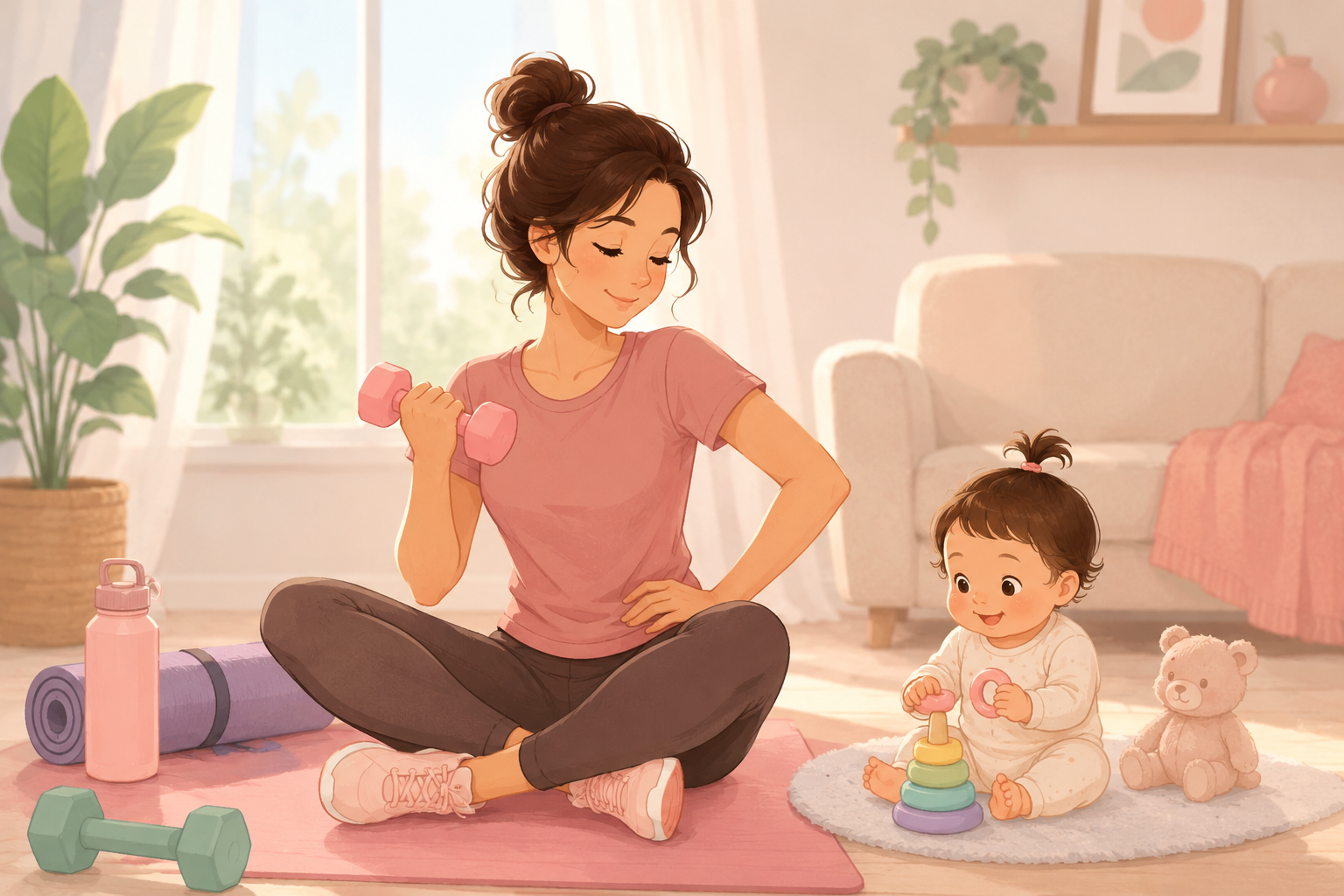
ACOG specifically notes exercise can be broken into shorter sessions across the day. Movement can also be folded into daily life — a walk with the baby, a short workout during nap time, or a few strength exercises while baby plays nearby.
Strength Training After Pregnancy
Cardio isn’t the only path to postpartum fitness. Once cleared, strength work helps rebuild muscles stressed during pregnancy and early motherhood.
Beginner-friendly options:
- Bodyweight squats
- Glute bridges
- Resistance-band exercises
- Light weights
- Modified push-ups
- Back and upper-body exercises
- Core and pelvic-floor exercises
Prioritize form over load. If you’re dealing with pelvic-floor symptoms, abdominal separation (diastasis recti), or significant pain, get evaluated by a qualified physiotherapist before progressing.
Staying Consistent: Apps, Programs, and Community
Knowing what to do and actually doing it consistently are two different challenges. A structured plan, reminder, or accountability partner makes a measurable difference for many moms.
Look for a program that:
- Is designed specifically for postpartum women
- Offers beginner-friendly entry points
- Allows gradual intensity increases
- Builds in rest days
- Fits your actual available time
- Avoids extreme dieting or unrealistic weight-loss promises
ACOG also recommends fitness apps and online exercise programs as tools to help postpartum women stay motivated and track progress. You don’t need an expensive program — even a simple tracking app with reminders can help.
A Realistic 4-Week Starter Plan
| Week | Focus |
|---|---|
| 1 | Short walks and gentle mobility |
| 2 | Add basic strength exercises |
| 3 | Gradually increase workout duration |
| 4 | Build a routine you can realistically sustain |
Missing a session isn’t failure — postpartum life is unpredictable. Restart at the next opportunity.
FAQs
When can I start exercising after a normal delivery? Gentle movement like walking and breathing exercises can often begin within days of an uncomplicated vaginal birth, as tolerated. Always confirm with your doctor first.
When can I start exercising after a C-section? Most doctors recommend waiting until after your 6–8 week postpartum checkup and clearance before resuming structured exercise.
Will exercising affect my breast milk supply? Moderate exercise is generally safe for breastfeeding mothers and doesn’t reduce milk supply. Aggressive calorie restriction combined with intense exercise, however, can affect supply — moderation is key.
How many extra calories do I need while breastfeeding? Guidance suggests roughly 330–400 additional calories per day for breastfeeding mothers, depending on the stage of lactation.
What’s the best exercise for postpartum back pain? Gentle core and back strengthening, combined with posture corrections during feeding and lifting, typically helps. Persistent pain warrants a physiotherapist evaluation.
Do I need a gym membership to get fit after pregnancy? No — bodyweight exercises, resistance bands, walking, and short home workouts are effective starting points for most postpartum women.
The Bottom Line
Postpartum fitness isn’t about rushing back to a pre-pregnancy body. It’s about giving your body the movement, nutrition, rest, and support it needs after a major physical event — on a timeline that fits your actual recovery, not an idealized one.
Before beginning or significantly increasing exercise after childbirth — especially after a C-section or complicated delivery — consult your healthcare provider. Stop and seek medical advice if you experience concerning symptoms or significant pain.
Gearing up for postpartum workouts often means new equipment — resistance bands, a supportive nursing-friendly activewear set, a jogging stroller, or a baby carrier for walk-and-workout sessions. On IPF’s marketplace, parents can buy and sell gently-used baby and postpartum gear with free seller listings, a small buyer commission, in-app escrow protection, and doorstep pickup/drop — making it easy to try postpartum fitness gear without paying full price, or pass yours on once you’ve outgrown it.