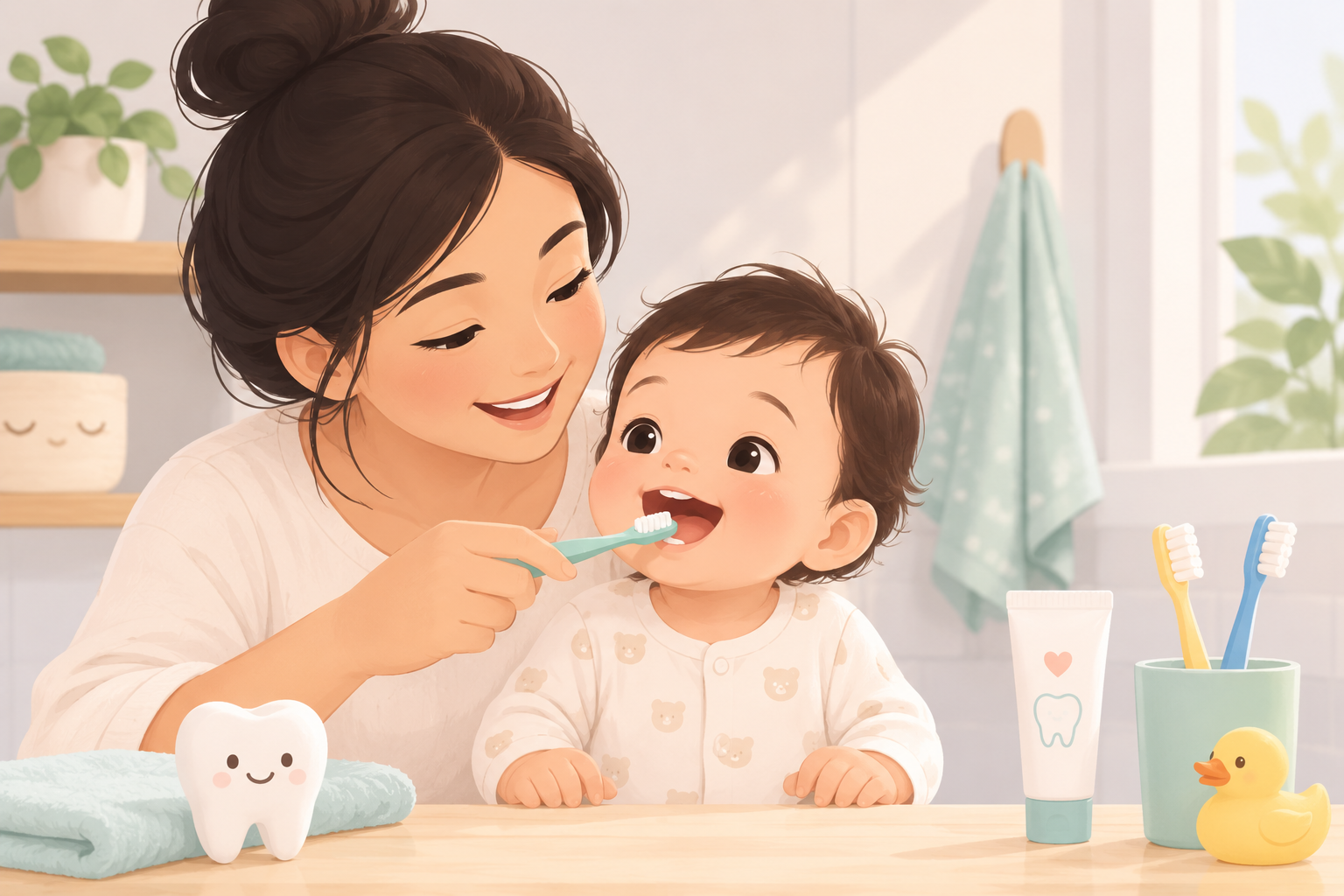
If you’ve ever stood in the toothpaste aisle wondering whether your 8-month-old with one tiny tooth actually needs to “brush,” you’re not alone. It’s one of the most-asked questions in Indian parenting circles — and one where advice from grandparents, pediatricians, and Instagram reels rarely agrees.
Here’s the short version: oral care starts before the first tooth, brushing starts the day it erupts, and yes — babies need fluoride toothpaste far earlier than most families assume. Below is a straightforward, dentist-guideline-based breakdown of what to actually do at each stage.
Quick-Reference: Toothpaste, Toothbrush & Routine by Age
| Age Stage | Toothpaste Type & Amount | Brushing Frequency | Who Brushes | Toothbrush Type |
|---|---|---|---|---|
| Birth – first tooth | None (clean gums only) | Once daily | Parent, with damp cloth or finger brush | Silicone finger brush |
| First tooth – 3 years | Fluoride, rice-grain smear | Twice daily | Parent does the brushing | Soft-bristled, small head, toddler grip |
| 3 – 6 years | Fluoride, pea-sized amount | Twice daily | Parent supervises/assists | Soft-bristled, age-marked handle |
| 6+ years | Fluoride, pea-sized amount | Twice daily | Child brushes, parent checks | Standard child toothbrush |
The one thing most parents get wrong: waiting for “enough teeth” or the ability to spit before starting fluoride toothpaste. Current dental guidance says neither should delay you — the amount used at each stage is small enough that swallowing a smear isn’t a safety concern.
Why Baby Teeth Care Actually Matters
It’s tempting to think “they’re going to fall out anyway” — but baby teeth do real work in the meantime:
- They hold space for permanent teeth and guide how they come in
- They shape early speech development
- They support chewing, which affects nutrition and jaw growth
- Untreated decay in baby teeth can affect the permanent teeth developing underneath them
Starting early isn’t about perfection — it’s about building a habit before your toddler is old enough to have strong opinions about it.
Choosing a Toothbrush and Toothpaste
Look for:
- Soft bristles — a baby’s gums and enamel are sensitive
- Small brush head — sized for a small mouth, not scaled-down adult brushes
- Easy-grip handle — for the parent doing the brushing, not necessarily the baby
- Fluoride toothpaste appropriate for the age band above — check the label for the concentration recommended for your child’s age
A finger brush is a good bridge for babies who resist a regular brush, but once a tooth has actually erupted, a proper soft-bristled brush cleans the surfaces a finger brush can’t reach — particularly along the gumline and behind the upper front teeth, a spot many parents forget entirely.
The Brushing Technique That Actually Works
- Sit your baby somewhere stable, or gently cradle their head so you can see inside the mouth
- Apply the age-appropriate smear of fluoride toothpaste
- Brush outer surfaces, then inner surfaces, then chewing surfaces
- Go along the gumline — this is where plaque builds up fastest
- Don’t skip the upper teeth — they’re harder to see and easier to neglect
As toddlers get older, let them hold a second toothbrush and “practise” while you do the actual cleaning. Most children don’t have the hand coordination to brush effectively on their own until well past age 6.
Milk, Night Feeds and Cavity Risk
This is a genuinely nuanced one, and worth discussing with your pediatric dentist rather than following a blanket rule. Once teeth have erupted, frequent or prolonged exposure to milk sugars — including extended night feeds — can raise decay risk in some children. This doesn’t mean stopping breastfeeding; it means being aware, and making brushing the very last step before bed, after any final feed.
What About Sugar and Snacking?
Total sugar matters less than how often teeth are exposed to it. A few practical habits:
- Skip sugary liquids in bottles or sippy cups
- Offer water between meals rather than juice
- Avoid all-day grazing on sweet snacks
- Treat sweets as an occasional, defined-time thing rather than a background snack
“My Toddler Refuses to Brush” — What Actually Helps
Almost every parent hits this wall, often out of nowhere. A few things that tend to work better than fighting it:
- Brush alongside them — copying you is often more persuasive than instructions
- Offer a choice within the routine — “blue brush or pink brush?” — not whether brushing happens at all
- Keep timing consistent — same two moments every day, so it becomes expected rather than negotiable
- Try a different position — lying down with head supported works for some toddlers; standing at a mirror works for others
- Stay calm and consistent — turning it into a nightly negotiation can teach a toddler that resisting buys extra attention or a later bedtime
It doesn’t need to be perfect every night. Consistency over weeks matters more than any single session.
When Should Your Baby First See a Dentist?
Don’t wait for a cavity or a complaint of pain. The general guideline is a first dental visit by 12 months of age, or within six months of the first tooth appearing — whichever comes first. This visit is usually less about treatment and more about checking development, assessing your child’s individual cavity risk, and showing you technique.
Decision Checklist: Is Your Baby’s Routine On Track?
- Gums cleaned even before the first tooth appeared
- Brushing started the day the first tooth erupted
- Using fluoride toothpaste in the correct amount for their age
- Brushing twice daily, with an adult doing or supervising it
- Brushing is the last thing before bed, after any final feed
- Sugary snacks/drinks aren’t an all-day grazing habit
- First dental visit booked by 12 months or 6 months post-first-tooth
If more than a couple of boxes are unchecked, that’s not a crisis — just a sign of where to start this week.
FAQs
Do I really need to brush before my baby has teeth? Yes — clean the gums with a damp cloth or infant finger brush from birth. It removes bacteria and gets your baby used to having their mouth handled, which makes actual brushing easier later.
Is fluoride toothpaste safe for babies? Yes, in the correct amount. A rice-grain smear for children under 3, and a pea-sized amount from age 3–6, is considered safe even if swallowed occasionally.
Should I wait until my toddler can spit to use fluoride toothpaste? No. This is one of the most common myths. Dental guidance recommends starting fluoride toothpaste at the first tooth, regardless of whether the child can spit yet.
How many teeth should my baby have before I start brushing? None needed — start with the very first tooth, not after a certain number have come in.
When should my baby’s first dental visit be? By 12 months of age, or within 6 months of the first tooth appearing, whichever is sooner.
Does breastfeeding at night cause cavities? It can raise risk once teeth are present, particularly with frequent or prolonged night feeds, but risk varies by child. It’s worth a conversation with your pediatric dentist rather than stopping automatically.
Not sure which toothbrush or toothpaste to pick? Check out parent recommendations for toothbrushes and toothpastes here — real picks from parents in the community, at the right stage and price point.
Building a bedtime routine often means rethinking your baby’s whole gear setup — from bath-time essentials to feeding gear as your toddler grows out of them. On IPF, you can pick up gently-used baby essentials from other parents in your city at a fraction of retail price, with escrow protection and doorstep pickup so nothing changes hands until you’re happy with it. And if your own baby’s outgrown their gear, listing it takes minutes and costs nothing to post.
This article is for general educational purposes and doesn’t replace advice from your child’s pediatrician or pediatric dentist. Recommendations may need to be adjusted for your child’s individual dental health, fluoride exposure, and risk factors.