We’ve all been there — a playroom filled with some of the best toys on the market, yet your child barely seems interested in any of them. Instead of engaging deeply, they move quickly from one toy to another or lose interest altogether.
Interestingly, research suggests that having fewer toys available at a time can actually help children play more creatively, independently, and with better focus. Too many choices can sometimes overwhelm young children and reduce meaningful engagement.
In this blog, let us explore how we can make the most of the toys we already own while keeping playtime exciting, calm, and meaningful.
What Is Toy Rotation?
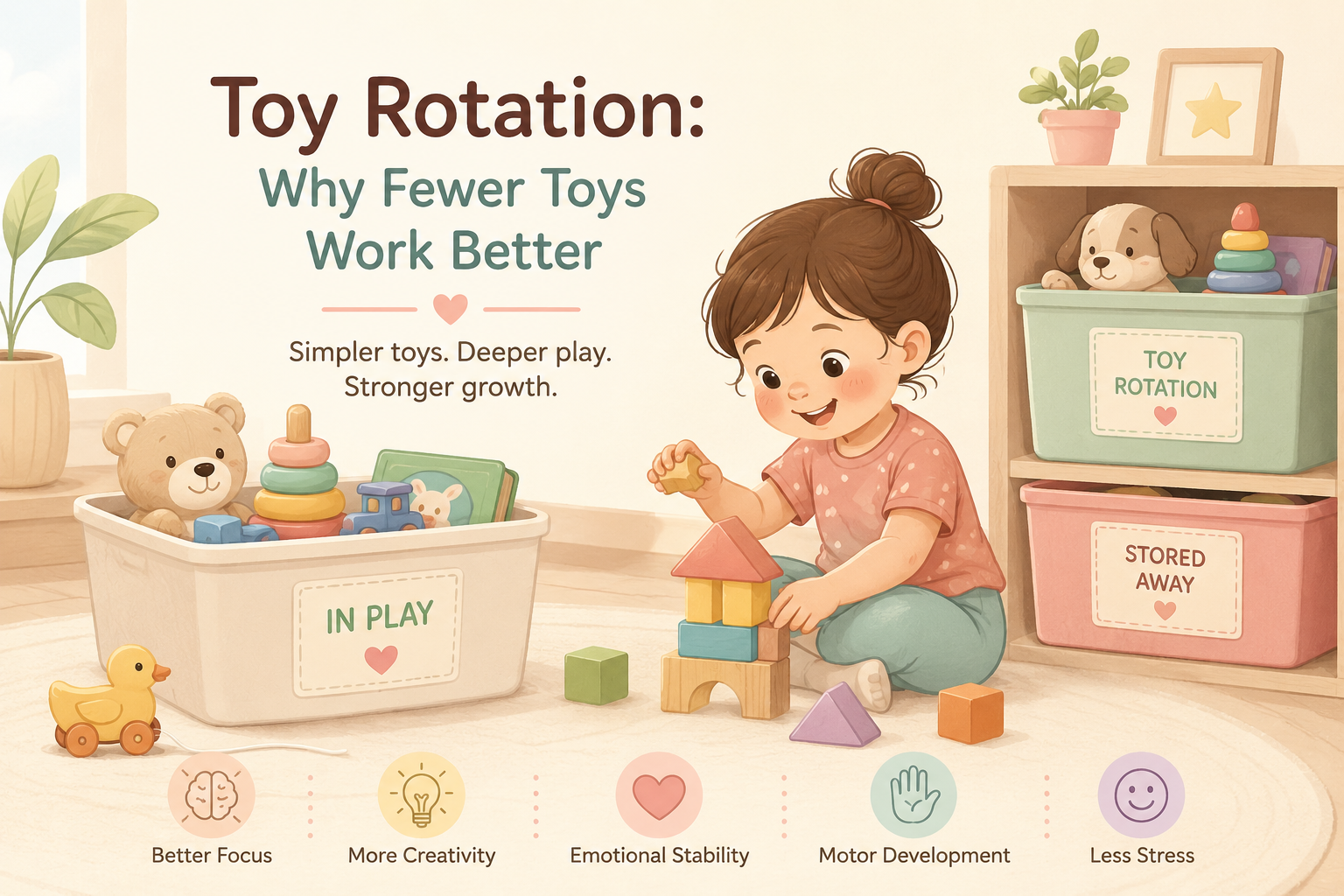
Toy rotation is the practice of keeping only a small selection of toys accessible to your child at one time while storing the rest away. Every few weeks, the available toys are swapped out with a different set, making old toys feel new and exciting again.
By dividing toys into smaller groups and rotating them regularly, children are presented with fewer choices. This can help reduce overstimulation and make it easier for them to focus on play.
Many parents also notice that reducing visual clutter in the play area leads to calmer behaviour and fewer frustration-driven toddler tantrums.
Benefits of Toy Rotation
Toy rotation does more than just reduce clutter in your home. It also creates opportunities for deeper learning, creativity, and independent play.
1. Better Focus and Deeper Play
When children have access to fewer toys, they tend to spend more time exploring each toy in depth instead of jumping rapidly between activities. This encourages focused play and helps build concentration skills over time.
2. Encourages Creativity
With fewer toys available, children often become more imaginative in how they play. A single toy may suddenly have multiple uses, and children naturally begin creating their own games and stories.
Dr. Tina Payne Bryson, co-author of The Whole-Brain Child, explains that novelty and manageable challenges during play help stimulate healthy brain development.
3. Supports Emotional Regulation
A simplified play environment can feel calmer and more predictable for children. Clinical psychologist Dr. Laura Markham notes that less overwhelming environments may help children self-soothe more effectively and feel emotionally secure.
4. Builds Motor Skills
Toys such as blocks, puzzles, stacking toys, and manipulatives gain more repeated use during toy rotation. Repetition is essential for developing both fine motor and gross motor skills in early childhood.
5. Less Stress for Parents
A constantly cluttered playroom can feel exhausting for parents too. Research published in the Journal of Environmental Psychology links cluttered living spaces with increased stress and lower overall life satisfaction.
Toy rotation helps keep the play area manageable without constantly buying new toys.
How to Start Toy Rotation
The good news is that there are no strict rules when it comes to toy rotation. You can create a system that fits your home, your schedule, and your child’s interests.
Step 1: Gather All the Toys
Start by collecting all the toys in one place.
Set aside:
- Favourite comfort toys
- Frequently used sleep toys
- Special attachment items
Then begin your first declutter:
- Remove broken toys
- Separate toys your child has outgrown
- Create a donation or resale pile
Step 2: Categorize the Toys
Next, divide the remaining toys into categories.
Some simple categories include:
- Building toys
- Pretend play
- Fine motor activities
- Sensory toys
- Art supplies
- Books
- Puzzles
You can create your own categories based on your child’s interests and age.
Step 3: Create Rotation Bins
Divide toys into separate bins or boxes.
A simple approach is:
- 1–2 toys from each category per bin
- Around 4–6 activities total in each rotation set
Keep one bin accessible and store the others out of sight.
Step 4: Rotate Every Few Weeks
Every 2–3 weeks, swap the current toys with another prepared bin.
Some parents rotate sooner if their child seems bored, while others leave toys out longer if engagement remains high. Follow your child’s cues rather than a strict schedule.
Age-Wise Toy Rotation Guide
The number of toys in rotation depends on your child’s age, development, and attention span.
Infants (0–12 Months)
Focus mainly on sensory exploration.
- Ideal rotation: 4–8 toys
Toddlers (1–3 Years)
Toddlers benefit greatly from reduced choices.
- Ideal rotation: 8–16 toys
Preschoolers (3–5 Years)
Preschoolers can manage slightly larger setups while still benefiting from minimalism.
- Ideal rotation: Up to 20 toys
Toy Rotation FAQs
How Do I Handle Gifts?
You can create a separate “gift bin” and introduce new toys gradually instead of adding everything at once.
It may also help to encourage family members to choose more open-ended toys rather than highly stimulating or single-purpose toys.
What If My Child Asks for a Hidden Toy?
Most experts suggest staying consistent with the rotation system. However, comfort toys and emotionally important items should always remain accessible.
Children usually adapt to toy rotation much faster than parents expect.
What If I Don’t Have Storage Space?
Toy rotation does not require a large home or elaborate storage setup.
You can use:
- Under-bed storage boxes
- Cupboards
- Suitcases
- High shelves
- Storage ottomans
Even small homes can successfully implement toy rotation.
What If I Have Children of Different Ages?
You can either:
- Maintain separate toy rotations for each child
- Or create overlapping categories where both children can play together
This depends on your available space and your children’s interests.
Final Thoughts on Toy Rotation
When it comes to toy rotation, there is no perfect system. Start small, observe what works for your child, and adjust along the way.
The goal is not to create a picture-perfect playroom. It is to create a calmer and more engaging environment where children can explore, focus, and grow at their own pace.
And honestly, some weeks the toy rotation works beautifully, while other weeks every toy somehow ends up on the floor again — and that is perfectly okay.
What matters most is raising happy, curious children who feel free to play, learn, and imagine.